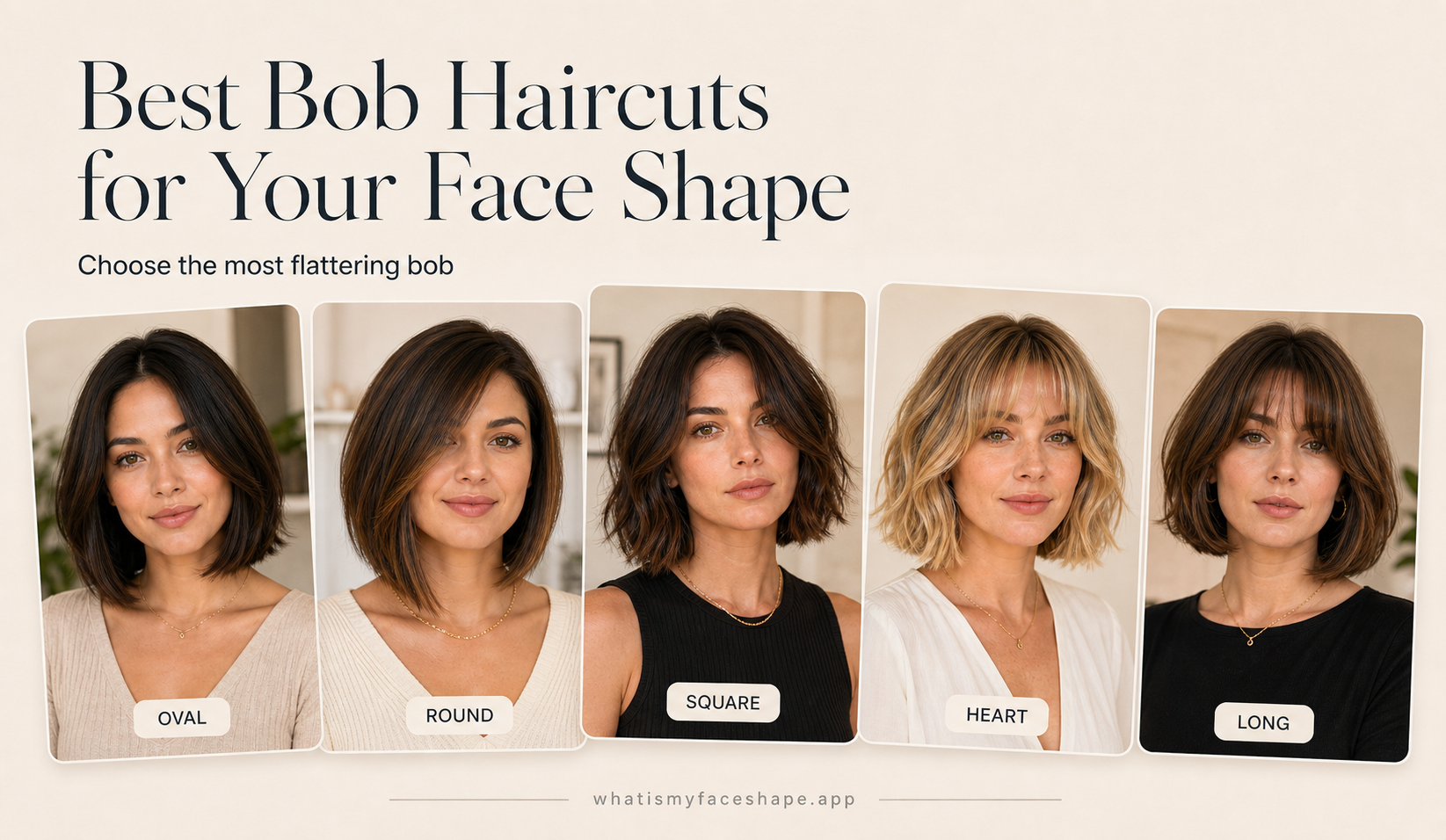
In a crowded market of “universal” haircut advice, the most reliable way to choose the right bob haircut is to treat it like proportion work, not a vibe check. Your length landmark (where the ends hit), weight placement (where it feels “full”), your part, and the kind of fringe you choose can quietly change everything about how your face reads in a mirror, in daylight, on Zoom, in photos, in life.
I’m going to walk you through the fast way to ID your face shape, then we’ll match flattering bob haircuts to each face shape, then we’ll get into the variables that actually make a bob wearable: layers, texture, bangs, maintenance, and the questions you should ask your stylist so you don’t walk out with the dreaded triangle.
How do you know your face shape fast?
Mirror and measurements
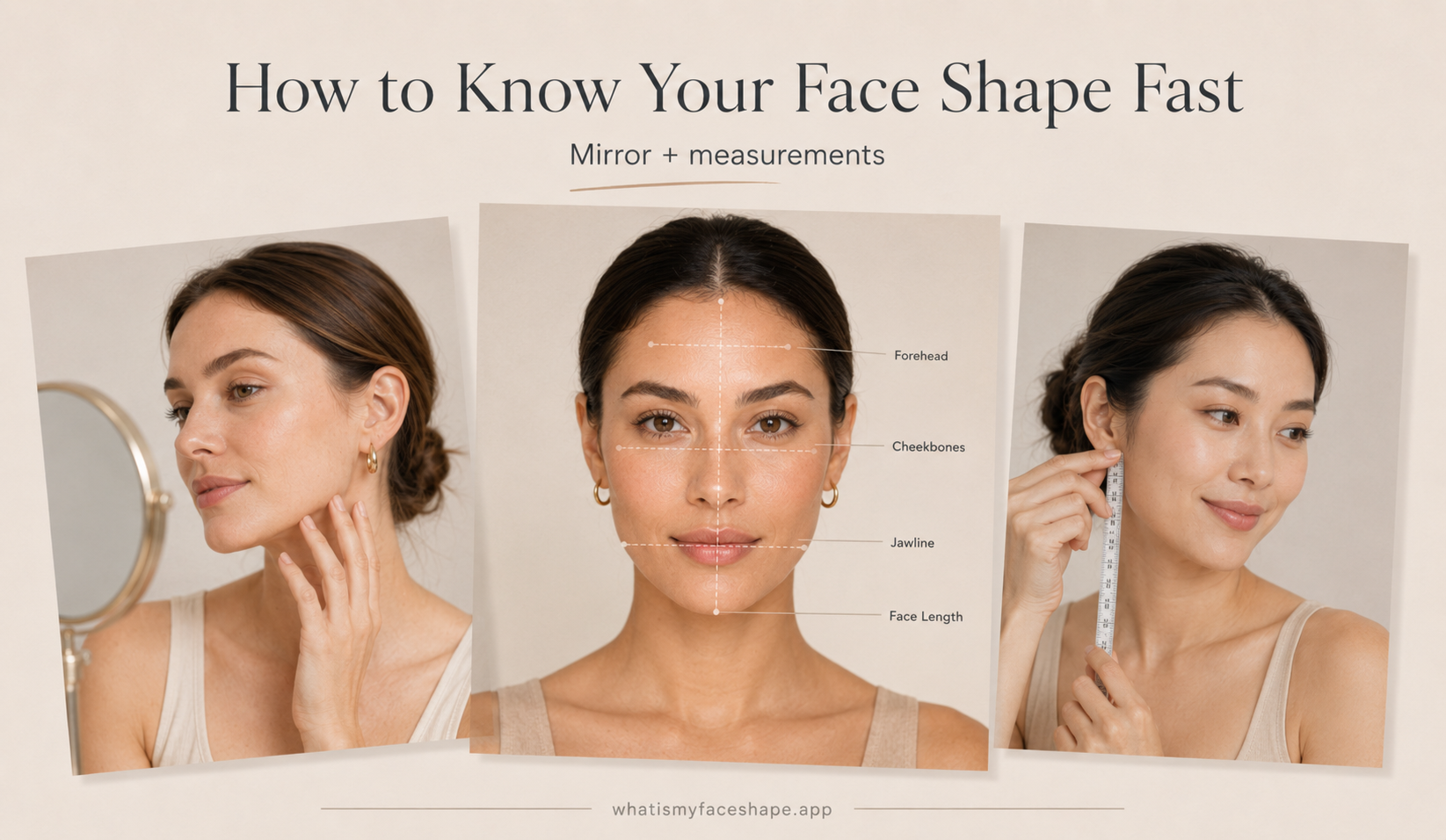
Stand in front of a mirror, hair pulled back, and do a quick check with a soft measuring tape (or a phone measuring app if you’re careful). You’re not hunting perfection, you’re hunting proportion.
- Measure forehead width at the widest point (usually mid-forehead).
- Measure cheekbone width at the outer corner of each cheekbone.
- Measure jaw width at the widest point of your jawline.
- Measure face length from hairline to chin.
- Note what’s “dominant”: length, width, angles, or a pointy chin.
If you want a more technical framework that acknowledges head curves and not just flat face shape categories, I like skimming the logic behind the Head Shape Matters system because it nudges you toward reality: your skull is not a piece of paper.
Common misreads
A lot of “round” faces are actually oval faces with full cheeks, and a lot of “square” faces are hearts with a strong jaw. The misread usually happens because people focus on one feature they’re insecure about (forehead, chin, cheeks) and call the whole face shape by that one thing.
Two quick red flags: if your face length is clearly longer than the width but you keep calling it round, you’re probably in long/rectangle territory. If your cheekbones are the widest point but your forehead and jaw taper, diamond is waving at you.
Also, lighting lies. Bathroom lighting is basically a conspiracy.
Photo checklist
Take a straight-on photo at eye level, neutral expression, hair pulled back. Then check three things.
- Where’s the widest point, forehead, cheekbones, or jaw?
- Do the sides read curved or angled?
- Does the chin read narrow, blunt, or pointed?
That’s enough to stop guessing and start choosing. And yes, tiny asymmetry is normal.
Pick the most flattering silhouette first
Before we talk specific face shapes, pick the silhouette. People shop for “a French bob” or “a micro bob” like they’re buying sneakers. Meanwhile the silhouette is doing the heavy lifting.
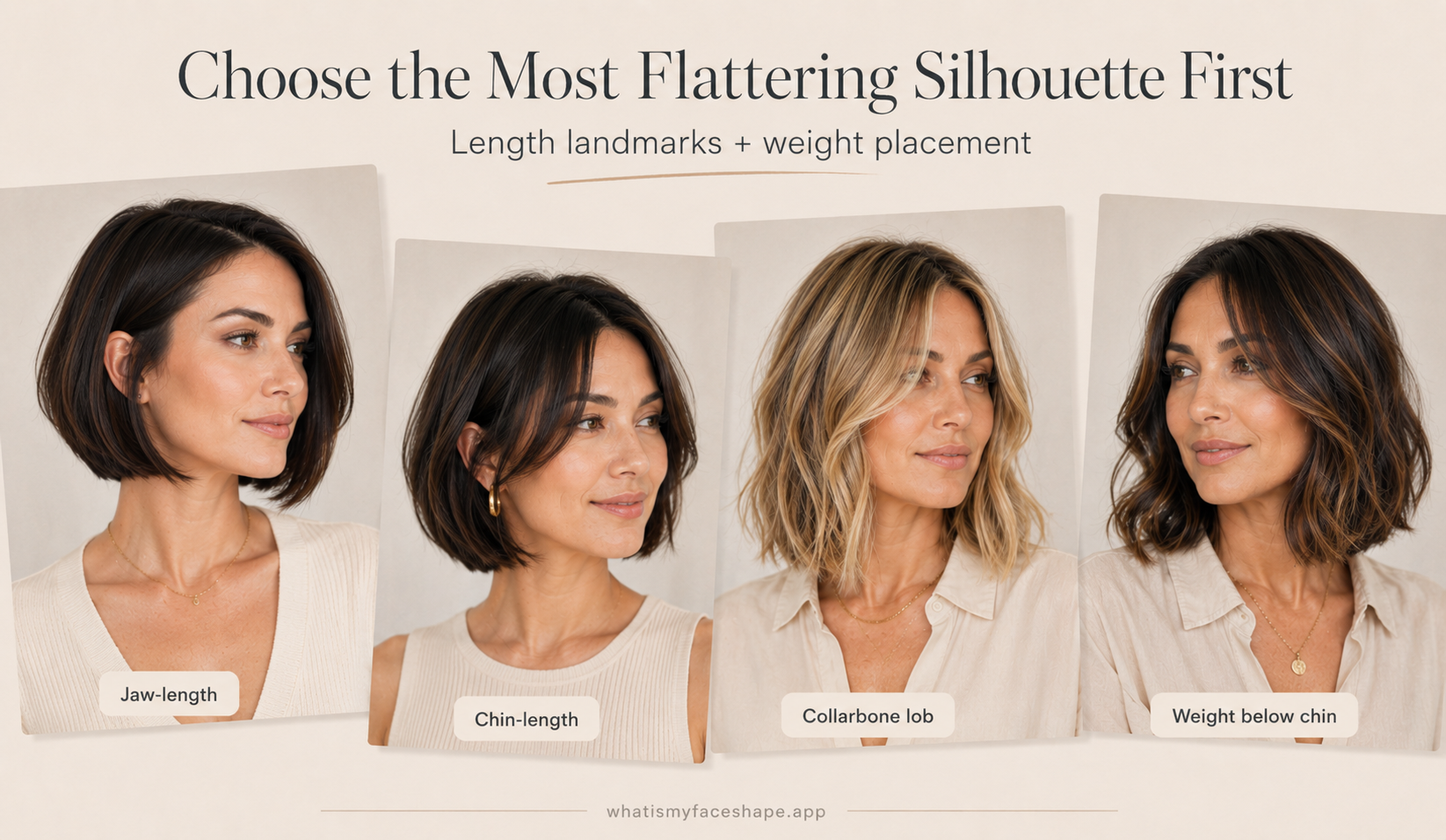
Length landmarks
A bob’s length is basically a visual underline for your features. Hit the wrong spot and your face looks wider, shorter, sharper, longer, whatever you were trying to avoid.
Jaw-length bobs are graphic and loud. Chin-length bobs can be perfect or brutal depending on your jawline and cheeks. A lob that sits around collarbone length tends to be the safest “I want a change but not a crisis” move, and it’s why so many round face shape recommendations lean longer.
If you’re the type who loves the Parisian vibe, you can still do it, just don’t confuse “short” with “good.” Short is a commitment. Spring humidity and cowlicks do not care about your mood board.
Weight placement
This is the part no one says out loud on social media because it’s not sexy: where the haircut holds weight determines whether your face looks balanced.
Weight at the jaw emphasizes the jaw. Weight at the cheeks emphasizes the cheeks. Weight below the chin elongates. If you have thick hair, internal layering can de-bulk without shredding the perimeter. If you have fine hair, too much layering can turn your ends into dust.
If you want a nerdy but practical breakdown of how elevation and weight removal prevent that triangle shape, there’s an educational video that gets into the mechanics of layered bobs with surprising clarity in this advanced layered bob lesson.
Part and asymmetry
A centre part can read chic and severe at the same time. A side part can soften, lift, and create length, especially if your face shape reads round or square. Slight asymmetrical lines, like an A-line bob that’s subtly longer in front, are basically optical engineering.
Pros will also manipulate parting and sectioning to “cheat” proportions, and it’s not magic, it’s training, the kind of thing you see in professional sectioning guides if you’re curious how the sausage gets made.
Match a cut to each face shape
Oval
Oval faces get told “you can wear anything,” which is true in the same way “you can eat anything” is true. You still have to live with the result.
On an oval face shape, a classic bob can be blunt and clean, a wavy cut can be shaggy, a micro bob can be fashion, and bangs can be whatever you want, straight fringe included, if your cowlick allows it. The main risk is going too heavy at the ends if your hair is thick, because it can turn elegant into helmet.
If you want a very precise way to think about why some looks feel “perfect” on oval faces, it helps to understand the geometry obsession behind “golden ratio” talk, even if it gets a little breathless, which is covered in a grounded way in this math-and-face-shapes salon explainer.
Round
Round faces get punished by bad advice. The goal is elongation and angles, not hiding.
The most consistently flattering bob haircuts for a round face shape land below the chin, often as a lob or an angled bob, with longer front pieces that pull the eye down. Side-swept or curtain fringe helps because it breaks up width across the cheeks and forehead without chopping the face in half.
My personal, slightly aggressive opinion: a blunt, chin-length graphic cut on a round face is playing on hard mode unless you have enough natural structure to carry it. If you love a blunt vibe, nudge it longer than the jaw and ask for subtle point-cutting and soft rounding at the ends so it doesn’t sit like a slab.
A lot of stylists recommend exactly this “below-chin” strategy for elongation, and it’s echoed in mainstream roundups like Byrdie’s take on bob haircuts for different face shapes.
Also, fine hair on a round face tends to look fuller with smarter shaping, not heavier perimeter density. Internal layering gives movement without making the ends see-through, something that shows up clearly in this weight placement tutorial.
Square
Square faces have angles. That’s not a problem. The issue is when the cut stops exactly at the jaw and creates a hard underline, which can make the face look boxier than it actually is.
Square faces usually do best with softness: layers, texture, bend, a bit of asymmetry, and length that doesn’t collide with the jawline at the sharpest point. A slightly longer bob with internal layers and a side part can be ridiculously flattering because it interrupts that strong horizontal line.
If you’re tempted by a French bob, keep it textured and not too blunt. A wavy finish suits square faces because it blurs the geometry in a good way, like diffusion for your jaw.
Match a cut to each face shape
Heart
Heart shapes often have a wider forehead and a narrower chin, sometimes with cheekbones that do most of the talking. The flattering move is adding some volume near the jaw and keeping the forehead area from feeling too “open,” depending on your features and your comfort.
A chin-length bob with a little bend can work, but the real win is a bob that doesn’t collapse at the bottom. Light layering and waves help fill the lower half so the chin doesn’t look extra narrow. Curtain fringe is a common fix because it visually narrows the forehead without looking like you’re hiding.
There’s a celebrity-stylist argument for waves and volume on heart shapes that’s refreshingly direct in this Anthony Nader breakdown, and even if you’re not chasing “old money,” the proportion logic is solid.
Long or rectangle
Long faces do not need extra length. They need width, or at least the illusion of it.
Shorter bobs with volume, full fringe, and a bit of outward movement can visually “shorten” the face. A 90 s inspired bouncy bob, a cheekbone-skimming bob hairstyle with texture, or a French bob with a full fringe can all work because they add horizontal emphasis.
If you want a specific editorial-ish set of suggestions for rectangular faces, Grazia’s piece on which bob style fits which face shape does a decent job mapping the logic without turning it into a personality test.
Diamond and triangle
Diamond faces usually have strong cheekbones as the widest point, with a narrower forehead and jaw. Triangle shapes often read wider at the jaw and narrower at the forehead.
For diamond, you want to avoid creating a “puff” right at the cheekbone width. A bob that hits just below the cheekbone with face-framing pieces that start around the cheek can keep it balanced, especially with a side part. For triangle, you’re often trying to soften and reduce emphasis at the jaw, so avoid blunt jaw-length cuts with heavy weight at the bottom, and consider layers and a fringe that gives the forehead a little more presence.
If you want a professional baseline for the classic categories, La’ James breaks down face shape identification for stylists in a way that’s simple enough to use but still rooted in cosmetology training.
Choose length, layers, and texture by hair density
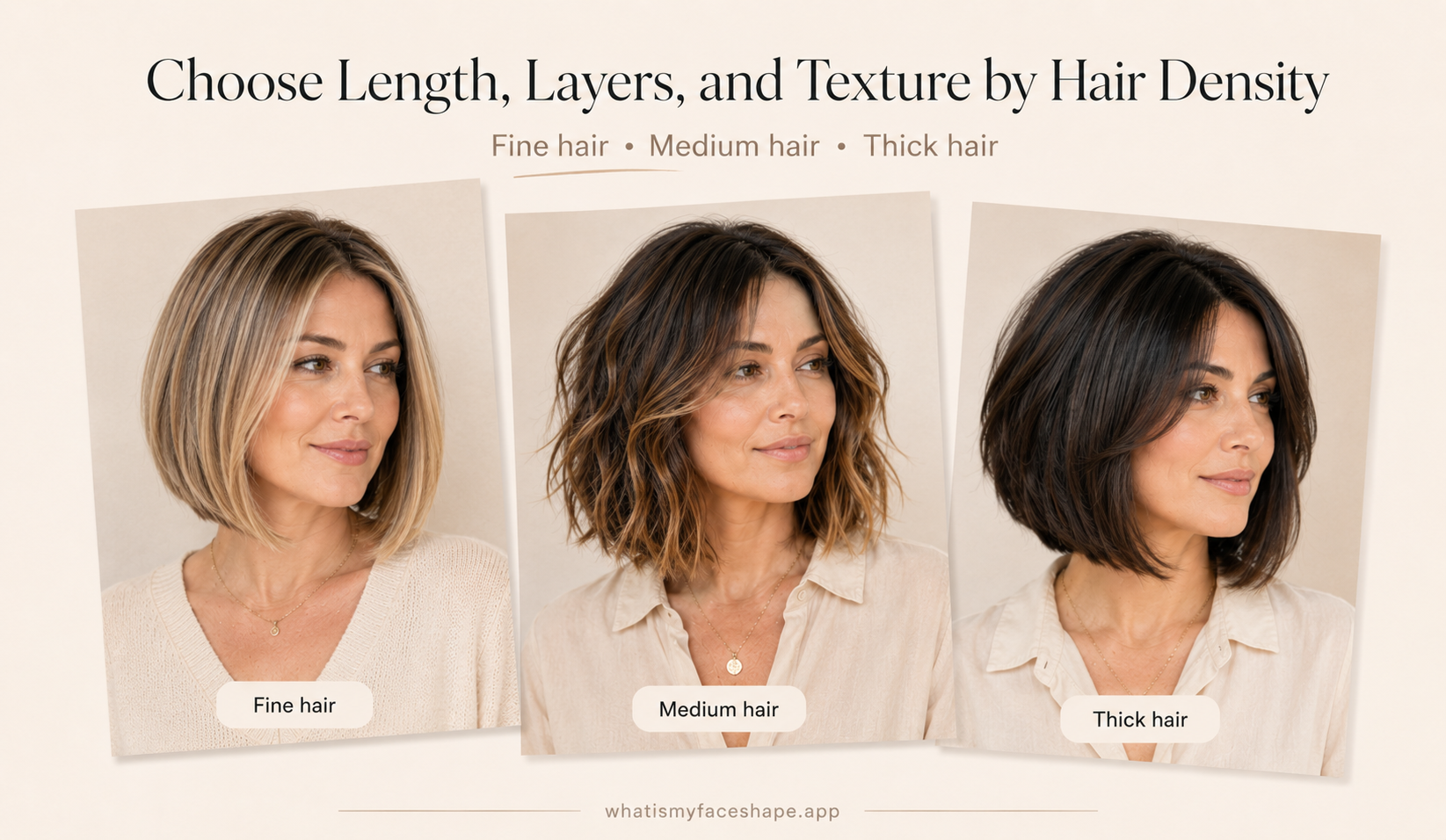
Fine hair
Fine hair loves a clean perimeter and strategic internal layering. Too many external layers and you get that wispy, broken outline that makes the bob look thinner, not thicker.
The move I keep coming back to, especially for fine hair and round faces, is a chin-to-shoulder length with a slight A-line, subtle internal layers starting behind the temple, and ends that curve inward just a touch. It photographs well. It grows out without revenge. It’s also the exact kind of “smarter shaping” that comes up in fine-hair bob guides like this one on winning looks for fine hair.
And yes, Reddit has receipts. People who switch from strict blunt to slightly angled, with softer ends, often report easier daily styling and a more defined jawline effect, which tracks with this very relatable fine-hair blunt bob update thread.
Medium hair
Medium density is the “easy mode” category, which is why people with medium hair can chase trends harder, micro bob, curtain fringe, whatever, without instantly regretting it.
If your hair texture is straight, you’ll see the precision. If it’s wavy, the cut needs to account for shrinkage and bend so your length doesn’t jump up when it dries. This is where I’d ask for point-cutting at the ends and light texturizing so you get movement without losing the shape.
Thick hair
Thick hair can make a bob look expensive or bulky, and the difference is technique.
Thick hair usually benefits from internal layering, careful graduation, and sometimes undercutting in hidden areas, depending on growth patterns. If you cut thick hair blunt at the jaw with no de-bulking, you risk that triangle silhouette, wide at the bottom, flat at the top.
If you want a basic idea of how small proportion differences show up in perception, even among professionals versus laypeople, this research on thresholds in symmetry perception is oddly relevant, because hair is part of the “frame” our brains are constantly scoring.
Choose bangs and face framing that balance features
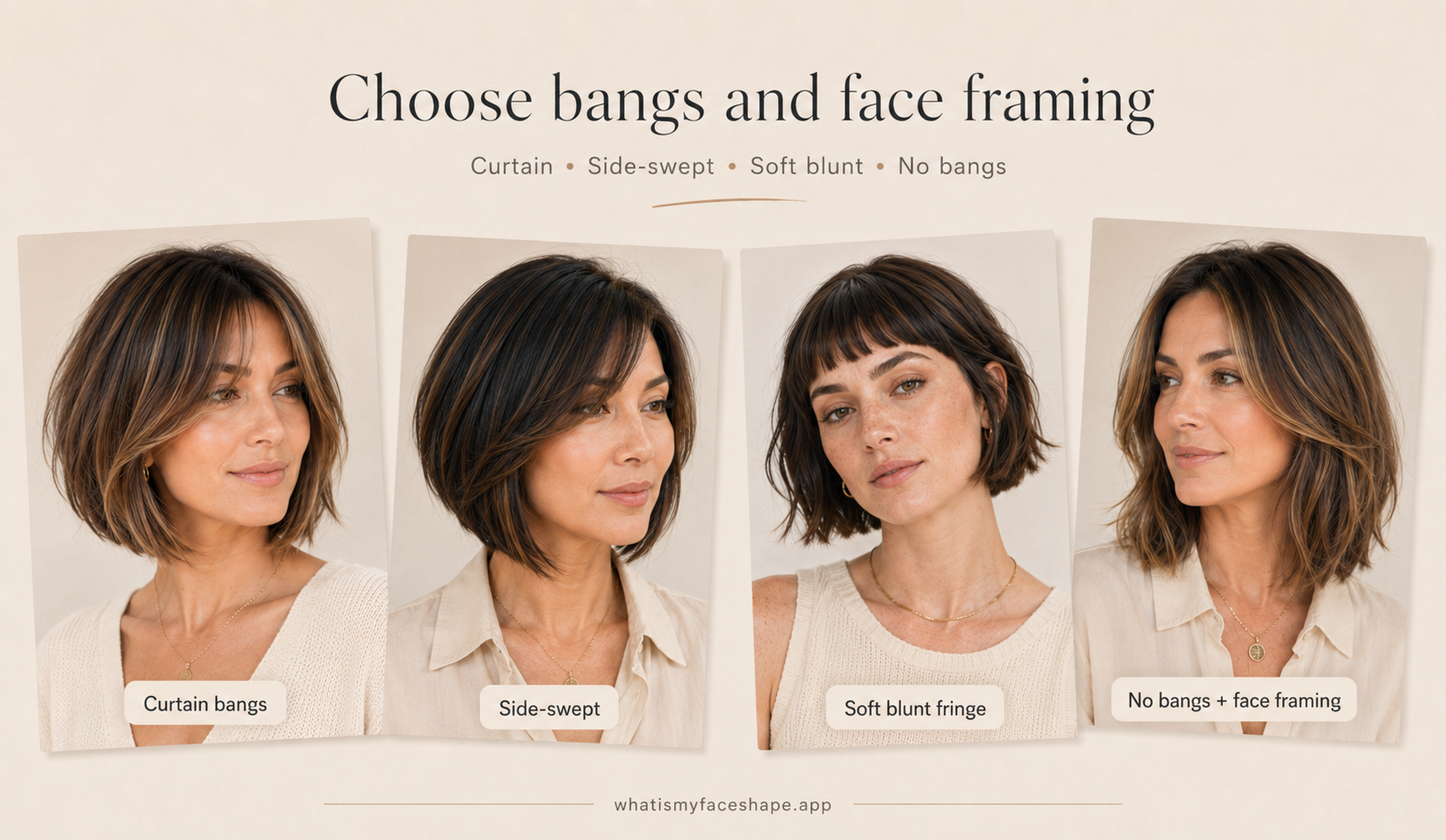
Curtain and side-swept
Curtain bangs are popular because they are forgiving. They can narrow a wide forehead, soften cheeks, and blend into the rest of the bob without locking you into a daily blowout routine.
Side-swept fringe is the classic “make it more flattering” move for round and square faces because it creates diagonal lines across the face, which reads slimming and lengthening. If your part naturally wants to live on one side, don’t fight it. Work with it. Your cowlick will win anyway.
Blunt and micro
Blunt bangs and straight fringe are graphic. They shorten the face visually, which can be great for long faces and risky for short faces. Micro fringe is a whole different persona, more runway than office, and I mean that neutrally.
If you’re in love with the idea, test it with clip-ins or a conservative first pass. Hair grows, but not at the speed of regret.
No bangs options
No bangs can look clean and modern, especially with a centre part, but it puts pressure on the cut’s line and your styling habits. If you’re not a heat-tool person, consider a slightly longer bob with subtle face-framing pieces so you still get softness around the cheekbones.
Frequently Asked Questions
How often do I need trims to keep a bob looking sharp? Every 6 to 10 weeks is realistic for most bobs, closer to 6 if you’re doing a micro bob or blunt line, closer to 10 if you’re wearing a lob with texture.
What should I ask for at the salon so I don’t get the triangle shape? Use these exact phrases, because vague doesn’t help anybody:
- “I want internal layering to remove bulk, not lots of external layers.”
- “Keep the perimeter clean but soften the ends with point-cutting.”
- “Let’s place the weight above my jaw, not right on it.”
Can a bob work with wavy hair? Yes, but you need the cut to respect shrinkage and bend. Ask your stylist if they prefer cutting wavy hair dry, wet, or a hybrid, and decide based on your curl pattern, not trend.
What’s the easiest bob to grow out? A collarbone lob with soft layers and a slightly angled front grows out like a normal haircut. Jaw-length blunt bobs grow out like a statement you have to keep explaining.
Is face shape the only thing that matters? No. Head shape, neck length, hair density, hair texture, cowlicks, and maintenance tolerance matter a lot, which is why a purely “face shape” chart sometimes fails. Facial morphometrics also vary across ethnicities, and one-size advice gets sloppy fast, which is why I appreciate research that treats proportions as diverse rather than default, like this study on facial morphometrics across populations.
Conclusion
The best bob haircuts for your face shape aren’t picked by name, French bob, classic bob, graphic cut, whatever, they’re picked by silhouette: where the length hits, where the weight lives, what your part is doing, and whether your fringe is helping or hijacking the proportions.
If you want the most practical next step, walk into your salon with two photos you like, one photo you hate (seriously), and a one-sentence goal like “elongate my round face shape” or “soften my square jawline,” then ask for the mechanics, not the trend. A good stylist will talk about weight placement, graduation, and maintenance like it’s normal, because it is. That’s the whole game.