Introduction
The haircut mistakes that make you look older are usually the ones that steal lift, sharpen your features, or expose thinning and dryness you did not even realize your cut was highlighting. Most people blame “getting older” when what they’re really seeing is a silhouette problem plus texture drift plus a maintenance plan that quietly stopped working.
I see it all the time in Los Angeles, where everyone is surrounded by cameras, sunlight, and mirrors that do not lie, but it’s not an LA thing. It’s a human thing. You get busy, you keep the same shape out of habit, your strands change a little (density, diameter, oil production), and suddenly your usual ponytail feels like it belongs to a different decade of your life.
What makes a haircut read older?
Shape and silhouette cues
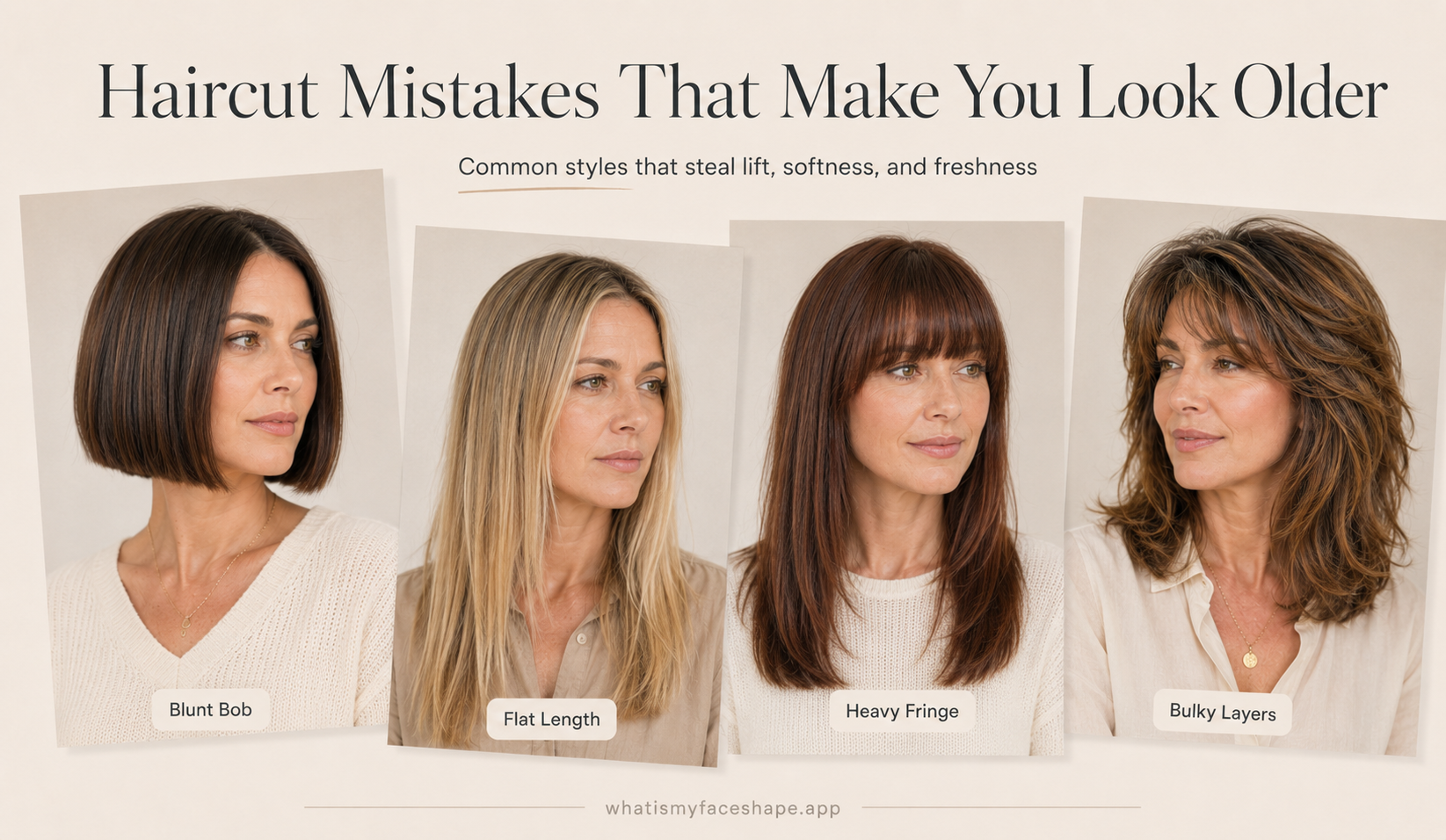
Aging, visually, is a geometry game. If the perimeter hangs like a curtain, the eye reads “down.” If the crown collapses, the eye reads “tired.” If the front is too severe, the eye reads “strict.” None of that is inherently bad, but it’s not the vibe most people want when they’re searching “haircut mistakes that make you look older.”
The most common mistakes tend to be these, and they’re annoyingly fixable:
- Keeping a one-length slab that creates a single heavy line at the bottom and nothing around the cheeks or jaw to balance proportions.
- Cutting layers for “movement” that turn into stringy, see-through ends, especially as density shifts.
- Choosing bangs or a part that fights your natural growth pattern and makes the front look sparse or chopped.
- Wearing the same outline for years while the strands themselves get finer, drier, and less cooperative.
Density, shine, and movement
People underestimate how much “youth” is just the illusion of fullness and glide. Strand diameter tends to peak around the 40s and then declines, which changes how easily you hold body and how blunt lines appear over time, and the figures in this paper on how hair shaft diameter peaks and declines line up with what stylists see on the floor.
Also, scalp oil changes. Less sebum, less slip, more frizz and stiffness. UCLA Health’s overview of uneven texture with normal chronological aging is a solid reality check because it explains why “the same cut” can start behaving like a totally different cut.
Contrast, color, and harsh lines
High contrast can be gorgeous. It can also get sharp fast. When melanin production decreases, the fiber changes structurally, not just in shade, and even basic medical references like MedlinePlus on melanin changes with age make the point that pigmentation is tied to what the strand is, not just what it looks like.
That’s why harsh, dark, single-process color paired with a blunt, heavy line can read like a helmet on someone whose texture is getting drier. The line is crisp, but the overall effect is stiff.
Fix flat, one-length hair
Add face-framing structure
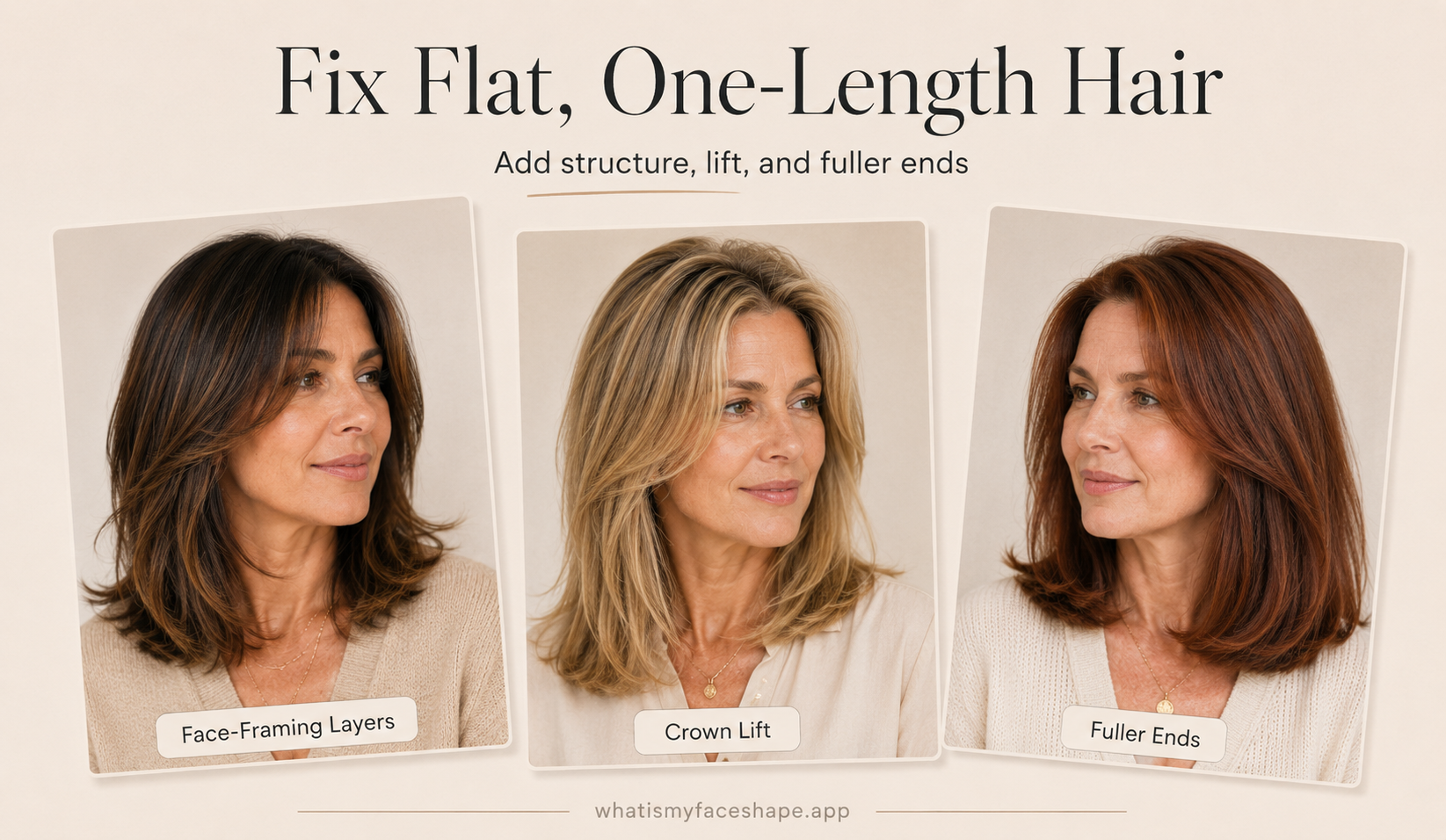
If your cut is “long and all one,” the first fix is usually not a dramatic chop. It’s adding structure where the eye actually looks: around the cheekbones, corners of the mouth, and jaw.
This is where my unpopular opinion lives. The whole “long hair equals old” thing is mostly a condition and shape problem, not a hair-length law from the universe. When length is glossy, maintained, and framed, it reads intentional. When it’s heavy, thinning, or left to fray, it drags everything down. Studies on age perception back up that density and overall presentation can meaningfully shift perceived age, and this dermatology review on age-related changes in strands and perceived age cues puts some science behind what mirrors already know.
Build lift at the crown
You do not need “big Texas volume.” You need strategic lift so the top of the head does not collapse into the forehead and temples.
A good approach is a subtle internal layer or a cleaner graduation through the back that props the crown without making the ends wispy. If you’re a texture powder person, use a tiny amount at the root, then stop, because overdoing it turns modern lift into dusty chaos. If you’re a blow-dry person, aim airflow at the roots first, then finish the ends, not the other way around.
And yes, your part matters. A widening part line is one of the earliest visible signs of density loss, and Mayo Clinic’s note on a widening central part as an early indicator is worth taking seriously if you’ve been wondering why your usual middle part suddenly feels a little stark.
Keep ends crisp and full
This is where people sabotage themselves: they want softness, so they thin and thin and thin. Then the ends look like a paintbrush.
If your ends are starting to look airy, you usually want a slightly blunter perimeter and fewer, better-placed layers. Not no layers. Just fewer wrong places. If you love length, commit to trims. A quarter inch every 8 to 10 weeks can keep the line looking deliberate without feeding the “I had to cut it all off” panic.
Choose bangs that soften, not age
Match bang density to hair
Bangs are not morally good or bad. They’re a density negotiation.
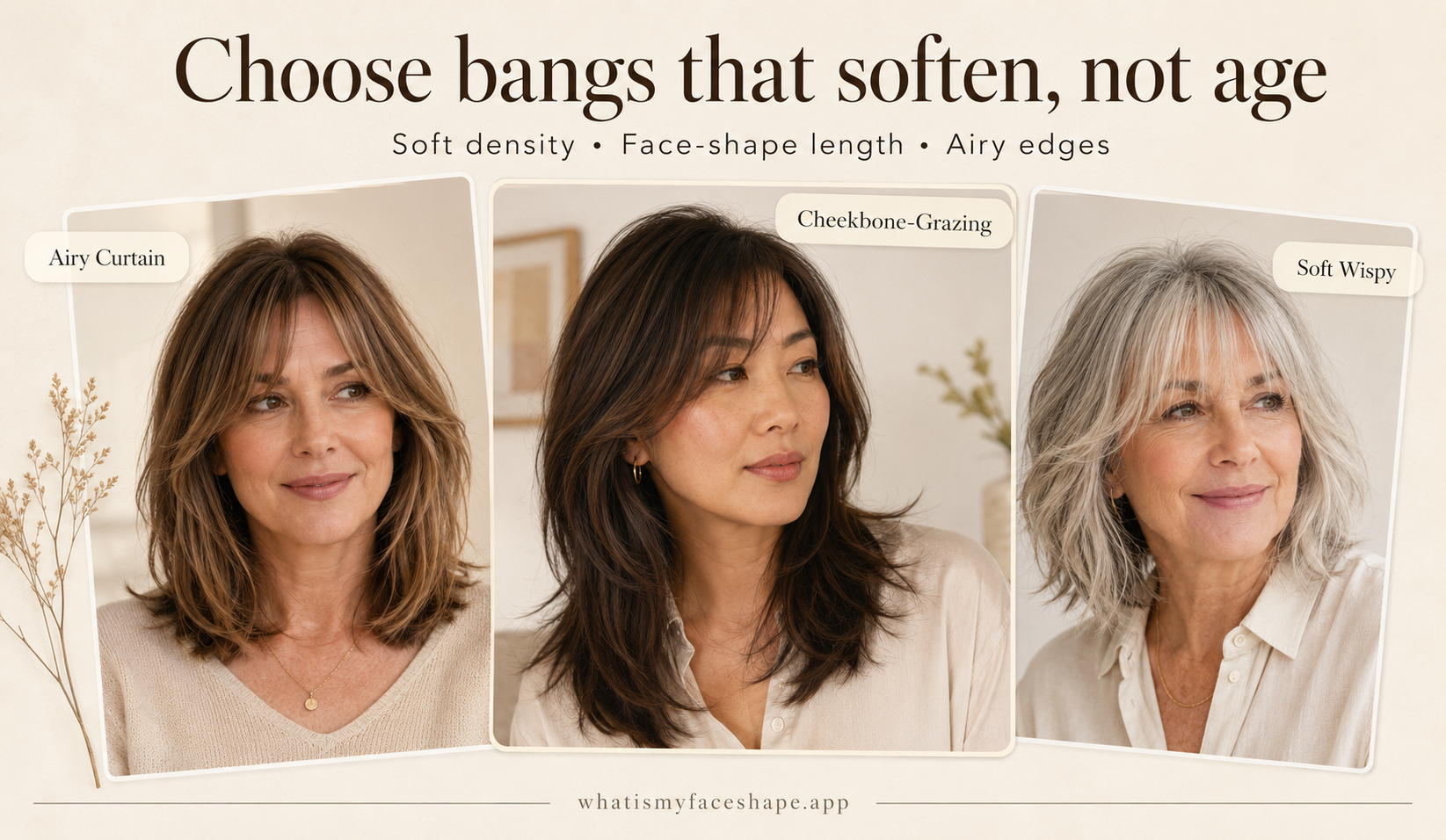
If the front is already finer, a super thick fringe can make the rest of the front look even more sparse by comparison. If your hairline is strong and you’ve got thickness, a denser bang can look expensive and French and all that. If not, you want something airier, a little broken up, more “curtain” than “helmet.”
Also, growth patterns are real. Cowlicks do not care about your Pinterest board.
Pick lengths for face shape
I’ll use “client Stephanie” as a real example because she’s basically the poster child for how bang length changes the whole face. Stephanie came in convinced she needed heavy straight-across bangs to look younger. Her forehead wasn’t the issue. The issue was that her cheeks needed a bit of softness and her jaw needed a little lift.
We went longer, cheekbone-grazing, slightly off-center. Instantly less severe. Same person. Different read.
Round faces usually do well when the bang breaks at or below the cheekbone, not right on the widest point. Longer faces often need a little width, but not a thick wall of fringe that makes the eyes look smaller.
Avoid harsh, heavy edges
A hard bang line can look “done” in a way that feels dated fast, especially if the rest of the cut is low-movement. You want softness at the tips, not raggedness. There’s a difference.
If you’re getting a bang trim between cuts, ask your stylist to point-cut lightly at the very edge so it bends instead of slapping down. If they reach for thinning shears immediately, speak up. On finer textures, that tool can turn the front into lint.
Avoid length that drags your features
When long hair stays youthful
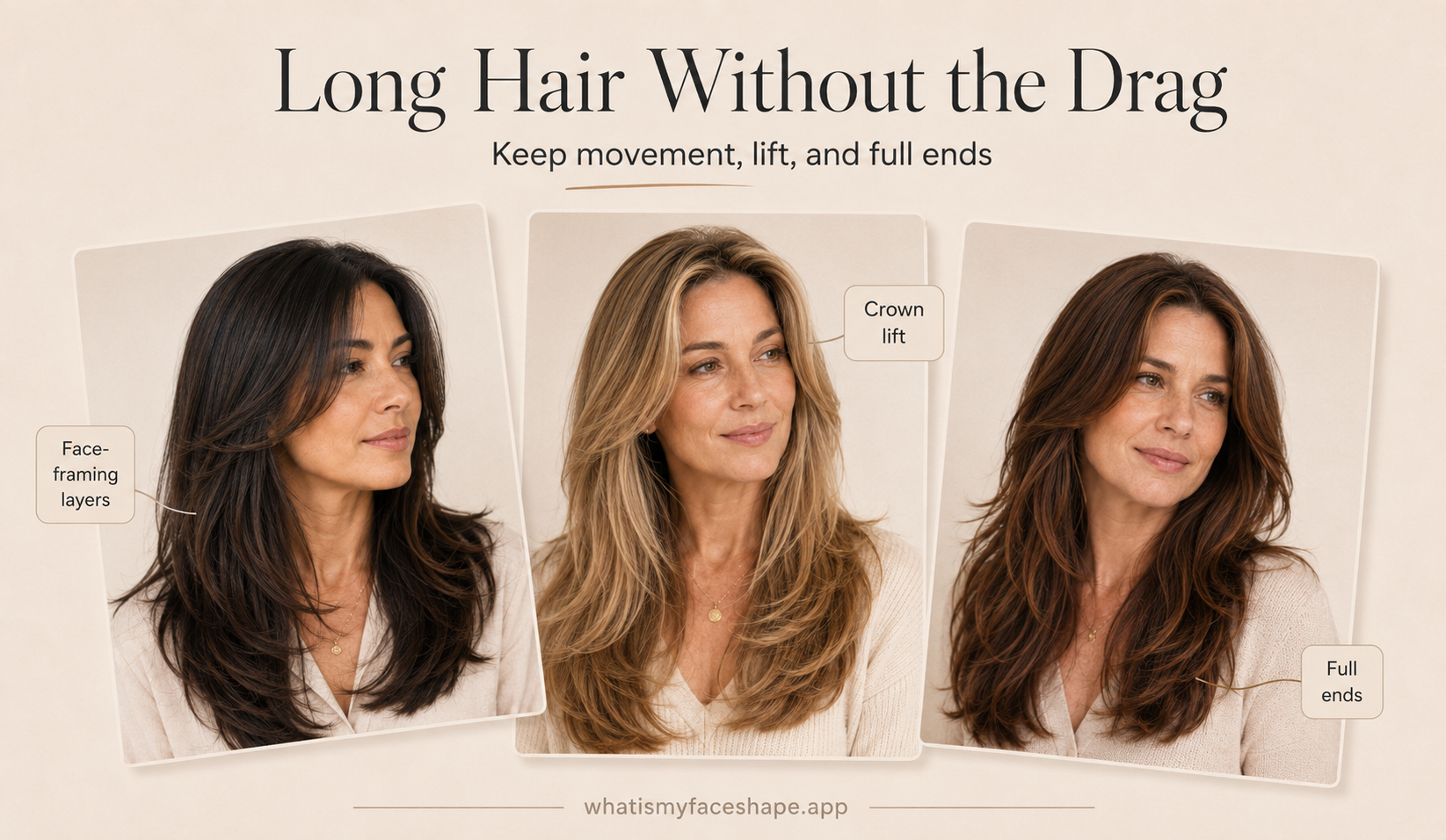
Long works when it has three things: clean shape, controlled texture, and ends that look alive.
If you wear it down, you need movement so it doesn’t read like a flat sheet. If you wear it up, that ponytail should not be yanking the front into a harsh line that spotlights every bit of recession at the temples. A softer ponytail with a little slack at the hairline is often more flattering than a snatched one, unless you’re intentionally going for that edgy “model off duty” thing.
And if you use hair extensions, the match matters more than the length. Badly blended permanent hair extensions can add years because the mismatch screams “I’m hiding something,” while well-blended ones just read as density. Ponytail extensions can be a great cheat for events, but if your day-to-day is struggling, fix the cut first.
When long hair adds years
Length adds years when it turns into weight plus dryness plus a single long line.
It happens a lot when people stop trimming, stop shaping, and keep heat-styling the same way they did in their twenties. Then the ends get thin, the top gets flat, and the overall outline points down. That downward pull is what people experience as “aging,” not the inches.
Oddly enough, a lot of viral takes about this veer into superstition, like this social post claiming length automatically ages you, and I get why it spreads because it feels simple, but the real world is messier.
Modern shapes without a big chop
If you don’t want a bob, you don’t need a bob. A modern long cut often looks like: slightly shorter front, face-framing layers that start higher than you think, and a perimeter that’s blunt enough to look thick.
If you’re thinning, avoid the “long layers everywhere” plan. That’s how you get stringy. Choose a stronger line and keep the interior lighter, not shredded.
Stop damage and frizz from aging you
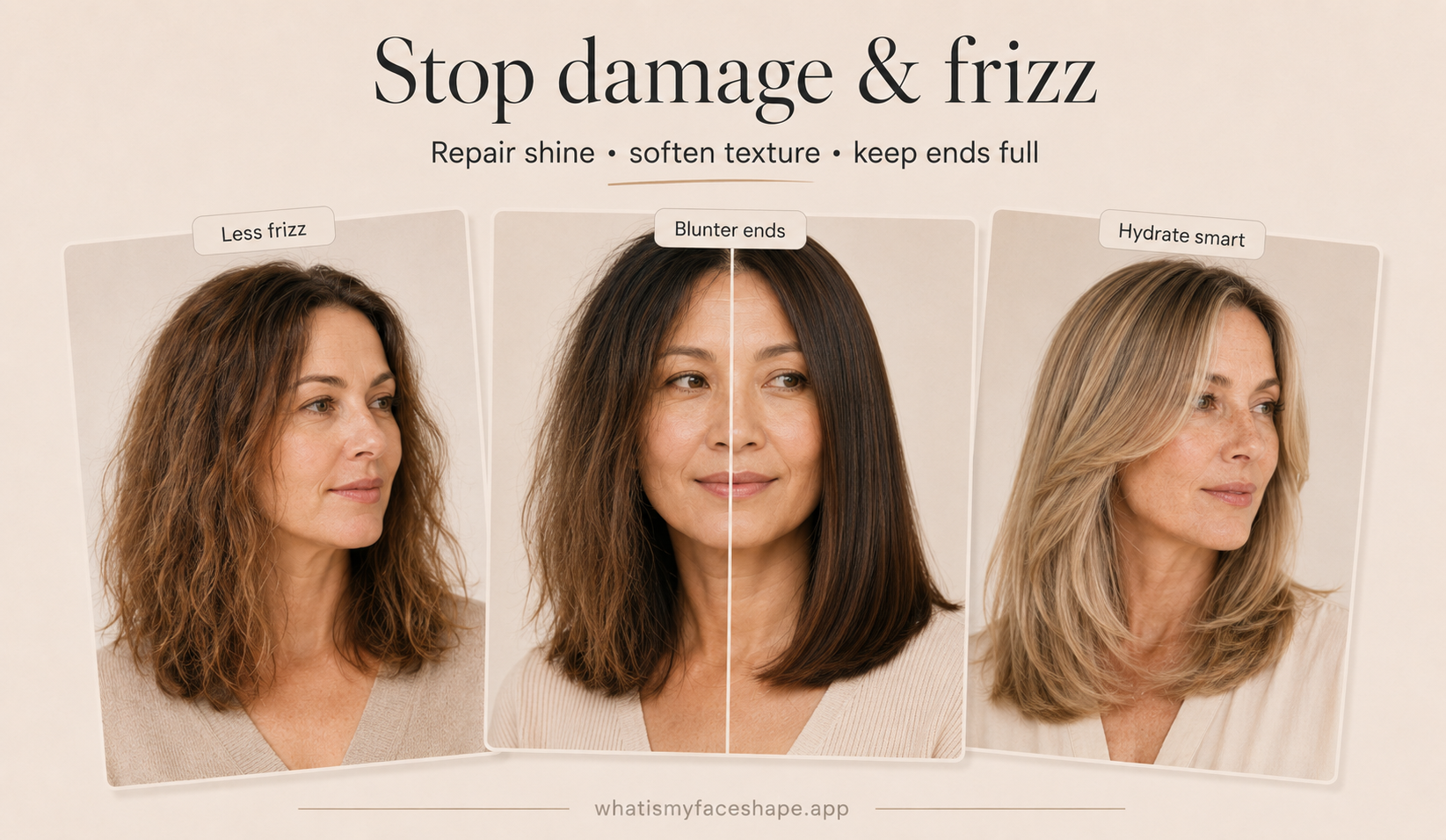
Prevent breakage and dryness
Damage reads older because it kills shine, and shine is basically a youth cue.
Aged strands have fewer cuticle layers and are more prone to mechanical damage, which is why the science around structural changes and cuticle vulnerability matters for everyday choices like brushing wet hair, rough towel-drying, and pretending heat protectant is optional.
If you’re seeing frizz that is new, take it seriously. It’s often dryness plus porosity. Scalp aging also contributes to drier texture as oil output and ceramide levels shift, and this dermatologist-led discussion on scalp lipid changes after 40 explains why your old routine can suddenly feel useless.
Replace “stringy” layers with bluntness
This is where I sound like I’m picking a fight with 2012. The obsession with “soft layers” has aged a lot of people.
When density drops, layered ends can separate into little ropes. A cleaner, blunter edge makes the bottom look thicker, which makes the whole style look healthier. If you still want movement, put it higher up, closer to the cheek and collarbone area, not at the last 3 inches.
Update products for your texture
If your routine is still built around “make it squeaky clean,” you’re probably creating your own frizz. Shampoo choice matters. Conditioner matters. Even your wash frequency matters if your scalp is producing less oil.
If you color, a leave-in can be the difference between “polished” and “stressed.” I’ve seen people get great mileage out of a light mist like Pureology Color Fanatic, but the bigger point is using something that gives slip without turning your roots into paste. If you live near the ocean, salt exposure can rough up the cuticle too, so don’t act shocked when beach air plus heat tools equals breakage.
Plan upkeep that fits your lifestyle
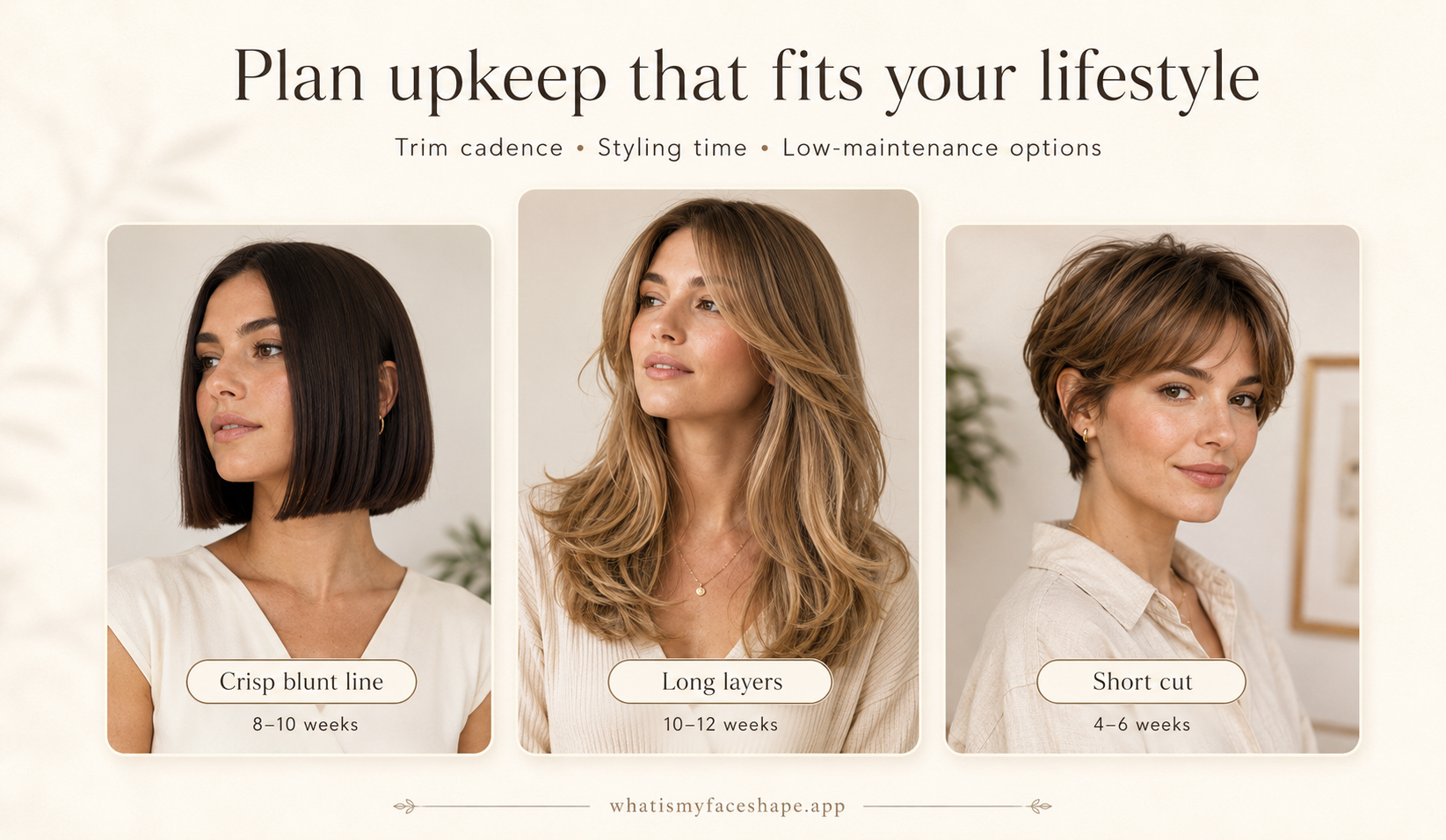
Trim and color schedules
A cut that makes you look younger is not a one-time event. It’s a plan you can actually keep.
Here’s a realistic upkeep table I use when I’m helping someone pick between options:
| Goal | Typical trim cadence | Color cadence | Who it fits |
|---|---|---|---|
| Keep a crisp blunt line | Every 8 to 10 weeks | 6 to 10 weeks if covering gray | People who like sharp shape and consistency |
| Long layers with face framing | Every 10 to 12 weeks | 8 to 12 weeks | People who want length but need movement |
| Shorter cut (bob/pixie/fade) | Every 4 to 6 weeks | 4 to 8 weeks | People who want strong structure and don’t mind the salon |
If you’re seeing thinning, take the conversation beyond aesthetics. A surprising number of women deal with visible thinning after menopause, with estimates around 52% experiencing noticeable changes, and it’s not a character flaw. It’s biology. Your cut has to adapt.
Daily styling time realities
Be honest about time. If you will not blow-dry, do not choose a shape that only looks good blown out. If you love air-drying, pick a cut that collapses nicely and has a plan for cowlicks.
Also, stop pretending you’ll become a different person on weekdays. You won’t.
Low-maintenance youthful cuts
Low-maintenance does not mean boring. It means the cut does more work than your styling tools.
For straight-to-wavy textures, a collarbone-length lob with face framing is usually the sweet spot. For curls, a dry cut that respects shrinkage can keep volume where you want it, not just at the bottom. For men, a soft fade with some crown length can be more forgiving than a tight, severe cut that emphasizes recession. A good barber will know this, but you have to tell them what you’re trying to avoid.
Use the [WhatIsMyFaceShape.App](https://whatismyfaceshape.app/) before you change the cut
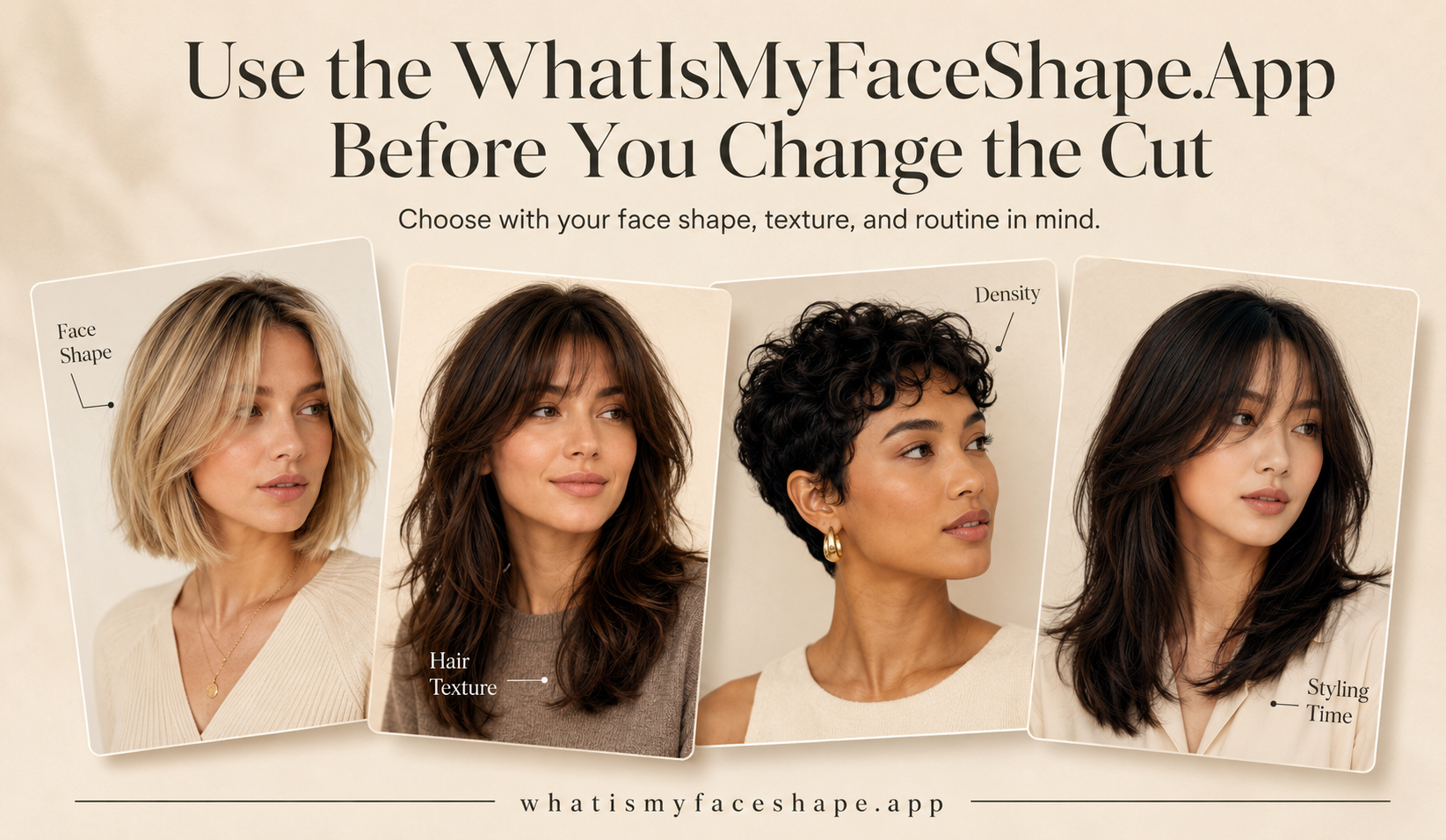
Most people walk into a salon with a vague request like “make me look younger” or “I need something fresher.” The problem is that a good haircut is not built from a mood. It is built from proportions: face shape, jawline, forehead width, cheekbone placement, hair density, texture, and how much time you actually want to spend styling.
Before you book the appointment, use whatismyfaceshape.app to check your face shape and get a clearer direction for what may suit you. The platform gives you a starting point, so you are not guessing from random Pinterest photos or asking your stylist to decode your whole face in five minutes.
Once you know your face shape, it becomes easier to choose the right strategy: softer layers for sharp angles, longer lines for rounder faces, face-framing pieces for balance, crown lift if your cut feels flat, or a stronger perimeter if your ends look thin. You can walk into the salon with a specific goal instead of saying, “I don’t know, just make it better.”
Use your result from whatismyfaceshape.app as a guide, not a strict rulebook. Show it to your stylist and say what you want the haircut to do: lift the face, soften the jaw, add movement, avoid stringy ends, make the hair look fuller, or reduce heaviness around the cheeks. That kind of direction is much more useful than copying a celebrity haircut that may not match your proportions.
Frequently Asked Questions
Do layers always make you look older? No. Bad layers do. Layers that remove too much density at the perimeter, especially on finer hair texture, tend to read wispy and stressed.
Are bangs a common hairstyle mistake? They can be if the fringe density doesn’t match the front or if the line is too blunt and heavy. The right bangs can soften and look youthful.
Does a middle part age you? Not automatically, but if your part is widening or your crown is flat, a strict center part can spotlight it.
Does long hair make you look older? Only when it’s heavy, flat, dry, or unshaped. Long hair that’s glossy, layered correctly, and maintained can look fresh.
What if my hair is thinning and every cut looks limp? You’re not imagining it. Hair density peaks early and declines from the mid-thirties onward, and research like this study on density peaking and declining over time is why you may need a blunter edge, smarter crown support, and gentler routine.
Conclusion
Looking older because of your haircut is usually not about chasing “youth” like it’s a trend. It’s about stopping a few silent mistakes: flat one-length shape, stringy ends, harsh lines, and routines that ignore how your strands and scalp change with age.
Keep the length if you love it. Modernize the shape. Respect density. Trim like you mean it. Then tell your stylist the outcome you want, not just the inches you’re willing to lose.