- How to Find Your Face Shape
- Hairstyles for Your Face Shape
- Beyond Your Face Shape
- The Impact of Bangs
- Common Hairstyle Myths Debunked
- Hairstyle FAQ
Key Takeaways
- Start with your face shape, then narrow your options using texture, density, and lifestyle.
- Choose cuts and bangs that balance proportions instead of following rigid hair rules.
- Use a quiz, measurements, or a photo-based tool when you want a faster starting point.
Choosing a hairstyle for your face shape means selecting length, layering, bangs, and parting details that balance your proportions. If you have not measured your shape yet, start with our face shape guide or use the face shape analyzer for a quicker starting point.
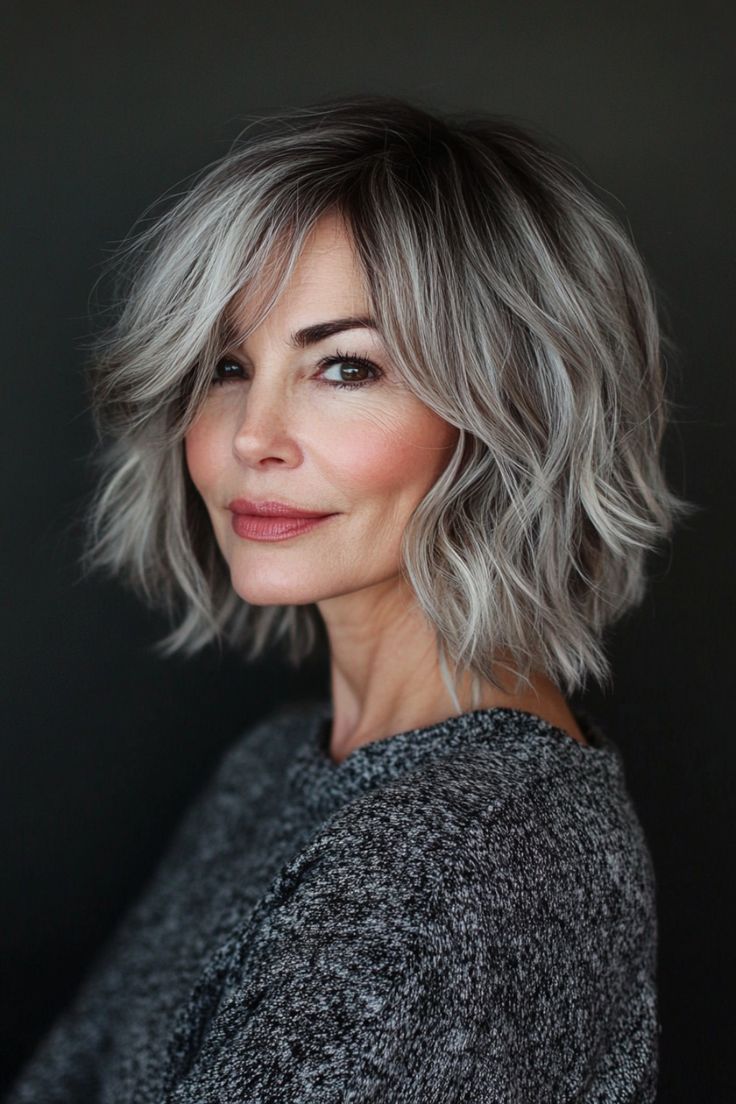
Round faces often suit layered cuts and soft crown volume. Oval faces usually work with most styles from blunt bobs to long waves. Square faces often benefit from side parts and face-framing layers. Heart faces often suit chin-length bobs and curtain bangs.
The following sections explain how to identify your proportions, compare the main face shape categories, and choose styles that work in real life.
How to Find Your Face Shape
Face shape guides hairstyles by indicating where width, length, and angles appear on your face. Use multiple approaches for confirmation. Focus on landmarks: forehead width, cheekbones, jawline, and full face length. Then contrast against the seven categories: round, oval or oblong, square, rectangle, heart, diamond, and triangle. Other faces are a hybrid of two, which is fine.
1. The Mirror Method
Stand in front of a mirror, comb hair away from your face, and carefully draw the outline of your face with a washable marker or lipstick. Keep your head level. The trace reveals your true curves and angles free from the distraction of hair or shadow.
Study the shape: Soft arcs often point to round. Long with soft edges can be oval or oblong. Straight sides and a flat chin line suggest square or rectangle. A wider top tapering to a narrow chin indicates heart. A narrow forehead and chin with high, dramatic cheeks indicate diamond. A jaw wider than the forehead indicates triangle. Observe a pointed chin, a broad or narrow forehead, or a prominent jaw.
Take a straight-on selfie of the trace. Contrast with a face shape chart. For some, it’s obvious at a glance. Others want to cross-check details, which is okay.
2. The Measurement Method
Use a soft tape measure. Record:
- Forehead width at the widest point is usually halfway between the brows and hairline.
- Cheekbone width at the most prominent points is measured from smile to locate them, cheekbone to cheekbone.
- Jawline width is measured from the jaw angle to the chin and then multiplied by two.
- Face length from hairline to chin.
Measure, number and ratio. Is your face longer than wide? Which is widest—forehead, cheekbones or jaw? Oval usually means length greater than width with a gently rounded hairline and a jaw just a tad narrower. Round is about equal length and width with soft features. Square has even width with a strong jaw. Rectangle is long like oblong but with squarer edges. Heart is widest at the forehead with a narrow chin. Diamond is narrow at the forehead and chin with high cheekbones. Triangle is widest at the jaw.
| Measure (mm) | Forehead | Cheekbones | Jawline | Face length |
|---|---|---|---|---|
| Your values |
Match the closest pattern, but allow for blends.
Quiz
Not sure which hairstyle suits you best?
Take the hairstyle quiz to get a faster recommendation based on your face shape and features.
3. The Digital Method
Take a clean, face-forward picture into a reliable face shape tool. Utilize even lighting, no heavy tilt, a neutral expression, and hair pulled away from the face.
Study the analysis points and proportions it indicates. Save or print the output so you can cross-reference approaches and take it to a stylist. If the tool says ‘oval’, but your jaw looks very squared, record both.
Most of us have a combination face, so trying styles will involve a little experimenting.
Hairstyles for Your Face Shape

Face shape helps show which lengths, parts, and textures usually look the most balanced. On this site we focus mostly on oval, round, square, heart, diamond, and long or oblong shapes, while also acknowledging that many people sit between two categories.
Find your shape below and then skim the brief list of ‘best’ and ‘avoid’ picks to tweak a style.
- Best by shape:
- Oval: bobs, lobs, long layers, curtain bangs.
- Round: long layers, deep side parts, angled lobs.
- Square: soft waves, textured layers, wispy bangs.
- Heart: chin-length bobs, layered shags, side-swept bangs.
- Diamond: textured lobs, curtain bangs, side parts.
- Oblong/Long: blunt bangs, shoulder bobs, curls, width at sides.
- Triangle: chin-length bobs, side-swept bangs, face-framing layers.
- Avoid by shape:
- Oval: heavy face-covering styles.
- Round: blunt bangs, chin-length blunt bobs.
- Square: blunt cuts, straight-across bangs.
- Heart: heavy straight bangs.
- Diamond: width at cheeks (blunt bobs, tight curls).
- Oblong/Long: extra-long, flat styles.
- Triangle: severe volume at crown only.
If you want more detail for a specific category, compare this overview with our guides to round face haircuts, square face haircuts, heart face haircuts, diamond face haircuts, oval face haircuts, and long face haircuts.
Quiz
Get hairstyle ideas that fit your proportions
Use the quiz to narrow down cuts, parts, and layers that are more likely to flatter your face shape.
The Oval Face
Oval fits the majority of styles, which is why it’s deemed the most versatile shape. Go for a blunt bob, a soft lob or long layers with shine. Center parts, sleek straight styles and soft waves accentuate balance with ease.
Avoid hair that conceals the face, such as full curtains of ringlets over the forehead. Curtain bangs or a light side fringe add interest without breaking balance.
Voluminous waves and blunt bobs work well because the face already reads balanced.
The Round Face
Try to add height and length. Long layers, deep side parts, and angled cuts pull the eye down and slim the cheeks. If you want more options, see our full guide to the best haircuts for round face.
Face-framing layers provide dimension and can elongate the face. Side-swept bangs and soft curls that begin below the cheekbone assist.
Stay away from blunt bangs and chin-length blunt bobs because they add width. Curtain bangs work best when they open at the cheeks. If you want to avoid the most common missteps, read these round face haircut mistakes.
The Square Face
Strong jawlines often benefit from a balanced look that incorporates softness. Opt for flattering hairstyles like textured layers, wispy bangs, and loose waves to soften the overall appearance. A side part or an asymmetrical cut can disrupt straight lines and introduce flow, making it ideal for those with square face shapes.
Face-framing layers are a genius choice, especially for oval face shapes, as they add length and soften harsh angles. Additionally, techniques like styling tools can enhance the effect of these layers.
Avoid sharp, blunt cuts or straight-across bangs that box in the face, as they can create a common mistake for those with prominent features. Instead, consider styles that maintain balance and elegance.
The Heart Face
Balance the wide top and narrow chin. Chin-length bobs and layered shags add weight where you need it. Side-swept bangs or a deep side part minimize the width of your forehead.
Layered curls or a full, round blowout add volume towards the jaw.
Avoid heavy, straight bangs that pack into the upper face.
The Diamond Face
This shape is balanced with pronounced cheekbones. Add ease and polish with soft, face-framing layers, curtain bangs, and textured lobs. Side parts keep the look soft.
Stay away from adding width at the cheeks with blunt bobs or tight curls. Lean into loose waves to maintain a relaxed, balanced line.
Aim to highlight your symmetry with touchable texture.
The Oblong Face
Take the look even shorter with blunt bangs or a chin-length cut. Add width with curls, shoulder bobs, and wispy side layers.
No extra-long, straight styles that elongate the face. Waves and layered ends create side volume and balance proportions.
Beyond Your Face Shape
Knowing your face shape is a strong starting point for finding the right hairstyle. Real-world cuts fit better when you also consider texture, density, and the way you actually style your hair day to day. Small tweaks, such as bang type, parting, and length, can significantly change the final effect.
When visiting your salon, bring a checklist that includes hair texture, daily styling time, and must-keep features like length and fringe. By noting your unique features, including your striking cheekbones and prominent angles, you can ensure that your stylist creates a balanced look tailored to your oval face.
Personalized result
Find the best hairstyle for your face shape
See which cuts, layers, and styling details are most likely to flatter your proportions.
Hair Texture
Texture defines how the cut behaves. Straight hair reveals lines and wavy hair provides effortless curl. Curls and coils add volume quick. Select shapes that reflect how your locks bounce on a moist day, not just on blowout days.
If you’re low fuss, stay away from styles that require daily flat-ironing or chemical smoothing. Other cuts accentuate or control motion. Long soft curls can both frame the face and lift the eyes. Shoulder-length cuts with girly flicks flare open your jaw line without weight.
Asymmetrical and curtain bangs work across textures and face shapes, and you can adjust the density to match your lifestyle. People with rounder faces often reach for extra length, but too much uninterrupted hair can make the face read wider. A side part, a few face-framing pieces, and soft movement can add lift without sacrificing length.
- Straight: blunt bob at chin to shoulder, long face-framing layers, micro or curtain bangs (light density)
- Wavy: shag or wolf-lite with soft layers, collarbone lobe, curtain bangs sweeping brows.
- Curly: Rounded layers that are shoulder to long, long layers that are curl-by-curl shaped, and light, rounded bangs.
- Coily: sculpted layers or tapered cut, longer crown with sculpted sides, twist-out-friendly lengths.
Hair Density
Work with density, not against it. Fine hair prefers light layers for air and lift — think a blunt baseline for strength, then soft, internal layering. Beyond your face shape, clipping in a couple of wefts of extensions can alter proportion, add movement and bolster styles that require density.
Very thick hair loves weight removal and tiered layers. Steer clear of one-length cuts on thick hair because they come off heavy and hard to style. For thick types, carve internal layers to free bulk and maintain a clean outline.
Personal Style
Hair should suit your life. If you need a style that ties up quickly and falls back into place, keep that practical need in mind. If you dress in a more tailored way, clean edges and a neat part may suit you. If you prefer soft lines, long layers with curtain bangs can complement that vibe.
Style and balance change with bang weight and overall length. Heavy bangs can shorten facial length, while one-length styles can elongate it. On oval faces, avoid adding heaviness just for the sake of it if a lighter shape already feels more balanced.
Go for an asymmetrical bob, a shoulder-length flicked lob, or long soft curls to polish your overall appearance. Beyond your face shape, build a mood board with global icons you admire. Pin wardrobes, makeup, and hair together so your cut sits in the same story.
Toss and test drive with a deep side part, a tucked ear, or extensions and always leave a small piece untucked on one side to soften lines, enhancing the overall look.
The Impact of Bangs

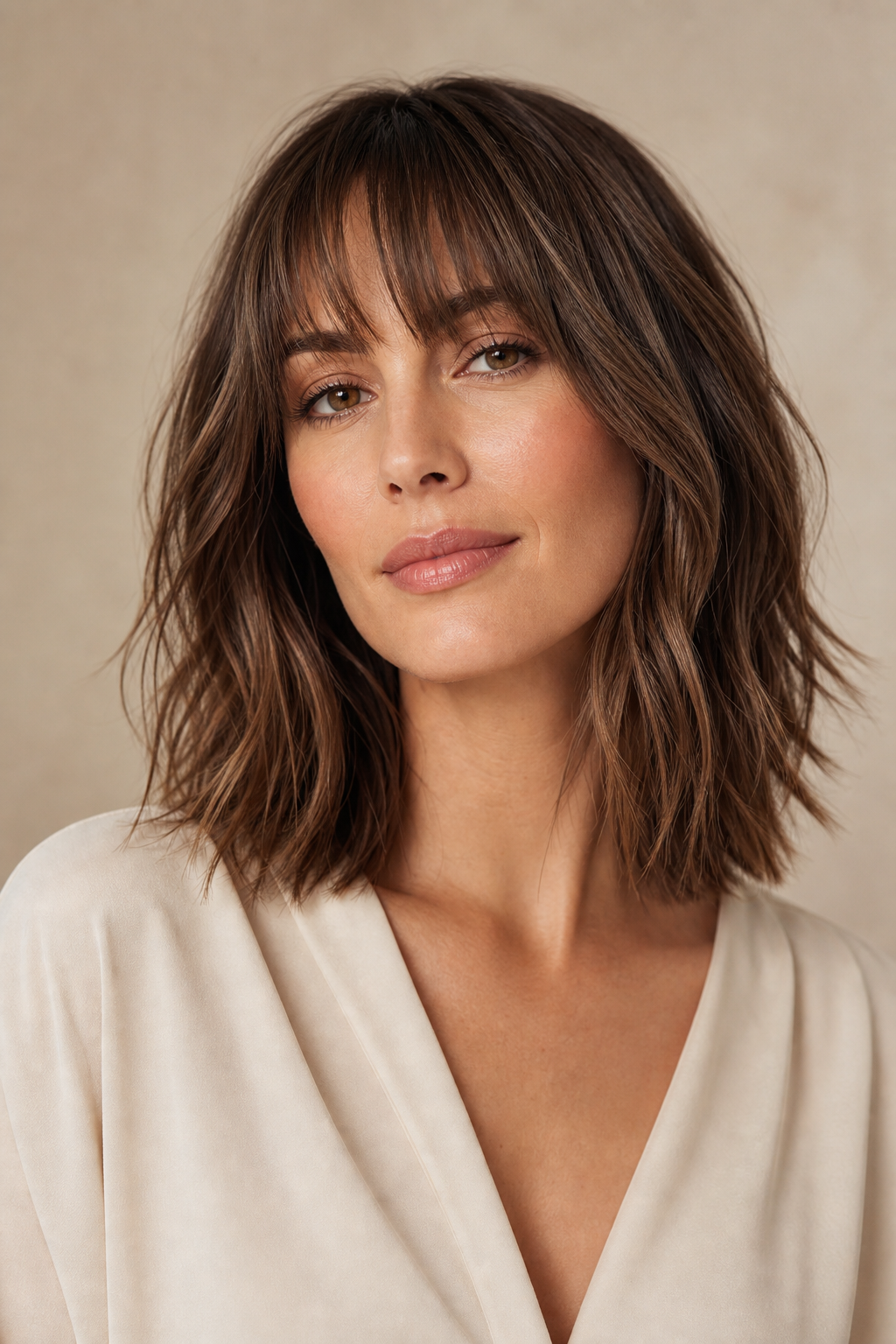
Bangs alter the way a face shape reads at first glance. They shift balance, draw the eye, and can soften or sharpen lines. Almost anyone can wear bangs because they can be tailored to different face shapes, including round face shapes and square faces. If bangs are your main question, our separate guide to the best bangs for your face shape goes deeper.
Selection relies on lifestyle, as bangs require styling, heat protection, and trims every single day. A stubborn hairline or cowlick can wage war on a straight fringe, especially for those with a long face shape. Damage protection is crucial since short lengths don’t leave much space to cut off splits, ensuring a balanced look.
Styles range widely: blunt, side-swept, curtain, wispy, and even micro bangs that can read edgy or classic, appealing to all hair types and enhancing overall appearance.
| Face shape | Best bang types | Notes |
|---|---|---|
| Round | Side‑swept, angled, long curtain | Adds shape and sharpness |
| Square | Wispy, soft curtain, feathered side | Softens jaw and corners |
| Oval | Most styles, curtain, blunt light | Keep balance; avoid heavy width |
| Heart | Curtain, long side, wispy | Softens forehead, skims cheekbones |
| Long/Oblong | Curtain, brow‑grazing blunt soft | Shortens length visually |
| Diamond | Curtain, soft side, wispy | Balances narrow forehead |
Softening Features
Soft, wispy bangs can beautifully complement an oval face shape, diffusing hard edges and creating a relaxed appearance. The light texture helps break up a strong jaw or sharp cheekbones, enhancing the overall look. Airy curtain bangs, placed at the center, allow brows to peek through while maintaining the softness of the style.
Feathered or side-swept bangs can transition smoothly across the forehead, guiding the eye on a diagonal. This technique plays softer than a block line, which is particularly effective for those with square faces. To avoid a common mistake of heavy, blunt cuts, consider adding subtle face-framing layers at the cheek and lip line for a more balanced look.
If you have a cowlick, request a chipped, piecey edge for better laying of the fringe, enhancing your overall appearance.
Creating Angles
To bring structure to a round or soft face, choose angular or asymmetrical bangs. There is something about a sharp side sweep that brings instant edge and can make features look crisper. Pair a deep side part with a diagonal fringe to sculpt form.
Steer clear of rounded, uniform curves if you are after more angles. They reverberate roundness. Pair angled bangs with layers. A long shag or wolf-lite style frames the face and the fringe sets the line.
Side-swept bangs add a dose of sharpness to a soft face, drawing attention to eyes and cheekbones.
Balancing Proportions
Bangs can balance height and width. For example, long side bangs work for a high forehead without seeming heavy. Curtain bangs, center-split and longer at the sides, suit just about every face shape and hair type.
Personalized answer
Still deciding between bangs, layers, or a bob?
Take the quiz to move from general advice to a more tailored hairstyle direction.
They can cleanly and low-risk shorten a long face and widen a narrow forehead. Micro bangs, if you’re so inclined, can really give a face a lift. They can be slicked back for timeless style or jagged for an edgy look.
Mind upkeep includes daily smoothing, heat shield, and frequent dusting.
| Proportion challenge | Helpful bangs | Avoid |
|---|---|---|
| High forehead | Long side, soft blunt, curtain | Micro on tall foreheads |
| Long face | Curtain, brow‑grazing soft blunt | Extra‑long, center‑flat |
| Narrow forehead | Curtain, airy side | Heavy straight micro |
| Strong jaw | Wispy, feathered side | Thick blunt lines |
Common Hairstyle Myths Debunked
Face shape receives a ton of publicity. It’s just one piece of the equation. For the record, most of us don’t fit one tidy shape. From the side, you could appear oval, the front a bit square and in pictures a little heart-shaped. That’s why hard and fast rules miss the mark.
As it turns out, what works best is often a hybrid of hair type, lifestyle and personal style mixed with a dash of face-shape logic.
Dispel the idea that only certain face shapes can wear specific hairstyles—customization is key.
No face shape has a monopoly on a cut. A bob, shag, or long layers can shift with small edits: part line, fringe length, weight removal, and how the ends sit. Old-school advice dictates diamond faces must avoid hard edges. This advice can be handy sometimes, but there is no rule.
If you’re loving a crisp lob, you can blunt the ends but maintain a soft face frame to offset cheek width. The bigger point is that hair type and growth patterns shape outcomes more than geometry. Coarse curls require weight and moisture to lay properly. Fine, straight hair prefers wispy layers and sharp lines.
Begin with your hair’s needs, then adjust the silhouette to your features.
Challenge the myth that short hair isn’t feminine or flattering for all face shapes.
Short hair is about balance, not whether it reads masculine or feminine. A side-swept pixie can soften round faces, and a cropped cut with height can lift an oval or heart shape. For thick wavy hair, a textured crop sheds bulk and holds shape from day to day.
Fine hair will get a look of fullness from a short blunt cut that eliminates see-through ends. Feminine is what you make it: earrings, a soft fringe, or a sleek finish can tip the vibe where you want.
Expose the misconception that bangs are universally unflattering or hard to maintain.
Bangs can work for many faces and lifestyles when customized. Oblong faces are one of the few shapes that rock blunt bangs well since a straight fringe shortens the look of a long face. For curls, a shaped, cheek-grazing fringe melts into layers and grows out tidy.
For busy schedules, experiment with long, side-swept bangs that tuck behind the ear and extend the trim cycle to eight to ten weeks. Air-dry tricks and a little round brush go a long way; it is not always high maintenance.
Clarify that professional face shape analysis tools offer more accuracy than guesswork or trends.
Apps and pro tools can assist in mapping width points and lengths, but they still work best with context. Lighting, camera angle and hair volume can distort results. That’s why you’ll often see more than one “shape.
A good consult weighs metrics with hair type, scalp health, lifestyle and the message you want to send. Style is personal. The appropriate style complements your facial features, lifestyle and desired aesthetic.
A Personal Hairstyle Philosophy
A face shape is a great place to start, not an end point. We have six common shapes: oval face shape, heart-shaped, square, round, long, and diamond-shaped, which can inform length, parting, and weight, but don’t impose hard rules. For example, if you have a round face shape and adore a blunt bob at the chin, offset it with a soft side part or a slight wave. If your jaw is square and you desire sharp bangs, thin the fringe a touch and add some texture around the cheekbones. Take the map and pick your own trail.
Own your individuality and treat rules as suggestions, not commands. Hair texture can change how any rule manifests. Coils maintain height, so a long face shape could do well with a rounded crown and tight sides. If you have fine, straight hair, a chin-length cut and light layers that flare will widen a heart-shaped face. Thick waves can de-emphasize a strong jaw by using shoulder-length layers and a deep part. Your features are a narrative, and a cut should speak that narrative, not scrub it out.
Above all, be comfortable, confident, and expressive regardless of what’s ‘in’. Others say a bad hairstyle can pull the entire face down, while a great haircut enhances the overall appearance. That might well be true, but ‘good’ means it fits your life. If you’re always in a rush and need out-the-door effortlessness, select a style that air-dries well and lies into place with a quick brush like a layered lob for wavy hair or a cropped cut for tight curls.
If you love to leave a striking impression, go for a sharp pixie, high-contrast color block, or razor-edged sculpted bob. Style is personal work: what you keep up is what looks best. Use your hair as a sign of transition. Hair can trace where you are now. A new position might require gentler layers. A new town can inspire a bob. A major life change might seem complete with a buzz cut.
A lot of us discover that hair can be a self-esteem enhancer, not by correcting a face, but by presenting the self we wish to be presented. Push yourself to take frequent, low-risk tests to discover your sweet spot. Experiment with a new part for a week. Tuck one side behind the ear to reveal cheekbones if you have a diamond face shape. Pin fake bangs prior to cutting real ones. Request long layers initially.
If you like the shape, you can always go shorter on your next appointment. Save images of styles you desire, such as snug ringlets with a tilted back, a straight bob lengthening to 5 to 7 cm under the jaw, or extended layers beginning at the lip. Some know their precise target, while others discover by experimenting. Either route works.
Hairstyle FAQ
How do I choose the best hairstyle for my face shape?
Start by identifying whether your forehead, cheekbones, jawline, or face length stand out the most. Then choose styles that balance those proportions while still matching your texture, density, and styling routine.
Can I wear bangs with any face shape?
Usually yes. The key is choosing the right bang type. Curtain, side-swept, wispy, and soft blunt bangs each create different effects and can be tailored to most face shapes.
Does hair texture matter as much as face shape?
Yes. Face shape helps with proportion, but texture and density determine how a cut actually sits, moves, and styles from day to day.
What if my face shape looks like a blend of two types?
That is common. Start with the closest dominant shape, then adjust details like fringe, layering, and parting based on the features that stand out the most.