Start with what you see
Use a mirror to notice your forehead, cheekbones, jaw and overall face outline. Keep your observations before choosing a shape description.
Explore face shapes ↗
Notice four areas
Move your hair away from your face if you want a clearer view. Start with your jawline and write only what you notice: “My jawline looks softly curved.” Zenni Optical’s face-shape guide uses a rounded jawline and full cheeks in its round description. Your note is an observation, not a shape result.
Then ask where your outline seems widest: at the forehead, the cheekbones or the lower face? “My cheekbones seem wider than my forehead” is useful on its own. Zenni’s diamond description mentions prominent cheekbones with a narrower forehead and jawline, but one feature does not assign you a category.
Keep your observations
Try four separate notes rather than a single verdict. For example: “My forehead looks a little narrower than my cheekbones. My cheekbones stand out most. My jawline looks softly curved. My overall outline seems longer than it is wide.” The jawline is just one line in that list; it does not settle the others.
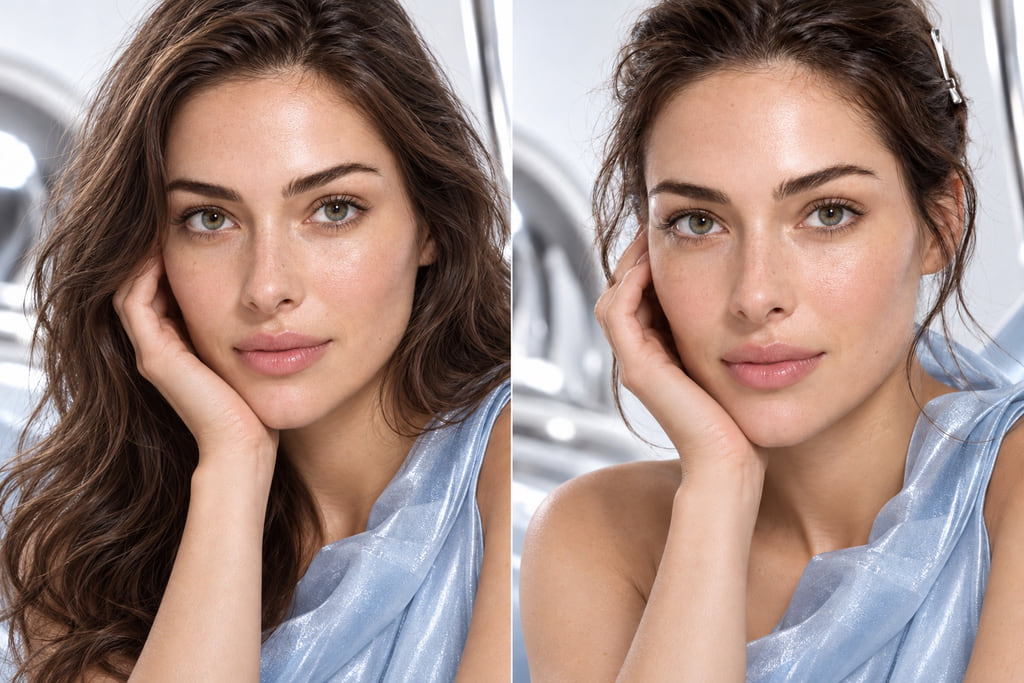
These checks mark what you have looked at. They do not calculate your face shape. If you are using a selfie, remember that camera distance can change what a face looks like in a photograph. Ward and colleagues’ perspective model specifically examines apparent nose width relative to cheek-to-cheek width at different distances; it does not test this checklist.
Choose your next step
Take a note such as “My cheekbones seem wider than my forehead” to the atlas, where you can compare the words used for heart and diamond outlines. You do not need a numerical cutoff on this page. Explore face shapes ↗
If none of the descriptions feels close, keep your original notes. You can use them to think about what you like wearing instead of forcing a single label. Zenni presents its styling suggestions as possibilities, with personal preference leading the choice.

Your next question
Does the checklist calculate my shape?
No. The checkboxes only record which areas you have looked at. The perspective research above concerns how camera distance affects a particular photographed proportion; it says nothing about the accuracy of this checklist.
Can I keep more than one description?
Yes. If two descriptions help you put your observations into words, keep both. A styling suggestion is optional, and your own preferences can guide what you explore next.