Why camera distance matters
A close photograph can change how facial features appear. Compare the conditions of the photo before treating it as a measurement.
Explore face shapes ↗Notice the setup before you decide what a photograph says about your face. Distance and direction are useful details to keep with the picture.
Separate distance from focal length
Why do you look different in selfies? One reason to consider is how close the camera was. In a 2018 research letter by Ward and colleagues, the authors used a mathematical projection model to study the apparent breadth of the nose in photographs. The paper did not test face-shape categories or a face-shape analyzer.
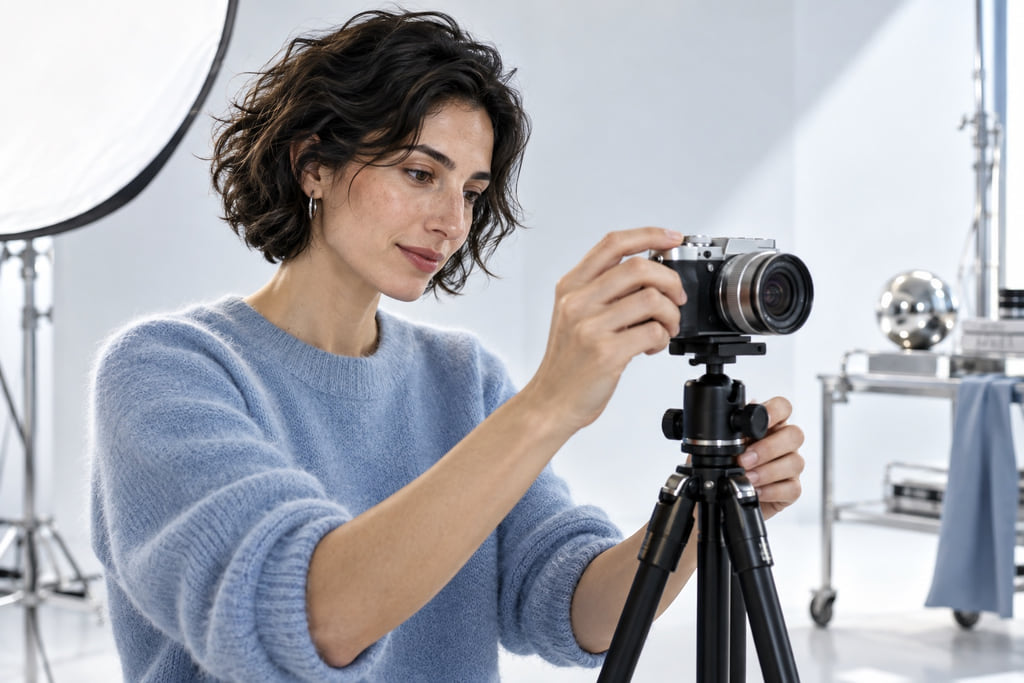
The model compares apparent nasal breadth with the distance between the cheekbones at different camera distances. A closer camera can change that relationship in the image. This is a perspective effect tied to where the camera is placed; a lens label alone does not tell you how far away it was. The result does not give a correction for jaw width, face length or every camera.
Read the study within its limits
If two portraits seem to show different proportions, note roughly where the camera was for each. A close selfie and a portrait made from farther away are different viewing conditions. That observation is a practical way to use the paper's narrow finding; it is not a test that can diagnose a face shape. For a broader set of visual notes, Start observing with the site's checklist.
Camera distance is also different from camera angle. The authors say that additional models would be needed for different vertical and horizontal angles. A photo taken from above, below or off to one side adds another viewing change that this model does not settle. There is no universal angle adjustment to apply to a selfie here.
Make a useful comparison
Keep the original camera-distance paper in view for what it actually models: apparent nose breadth relative to cheek-to-cheek breadth. A focal-length number cannot by itself replace a note about camera position. You do not need to adopt a fixed lens or mirror distance to make a useful personal observation.
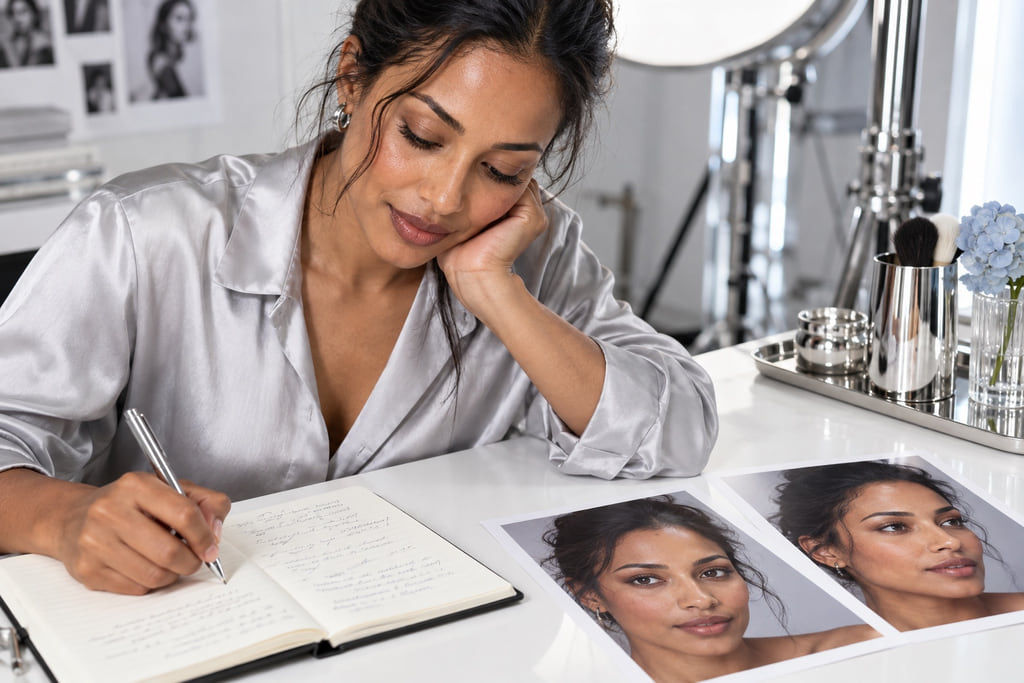
Try writing one plain sentence beside each picture: “camera held close at eye level” or “camera on a tripod farther away.” Then look for observations that remain useful to you across views, without treating the prints as measurements. If you want words for the overall outline, Explore face shapes as descriptions rather than a required result.
Your next question
Does this paper prove a face-shape test?
No. Its mathematical model concerns apparent nose breadth relative to cheek-to-cheek breadth. It does not validate a classification of the whole face.
Does the model settle every camera angle?
No. The authors specifically leave different vertical and horizontal camera angles for further modeling. Keep the angle in your notes instead of applying a correction the paper does not provide.