A guide to square face shapes
Explore a square face description and compare it with your own observations. Keep styling choices separate from shape labels.
Explore face shapes ↗Begin with the outline you see in a mirror. A descriptive word can help you make a note; it does not have to decide what you wear.
Start observing ↗Notice the contour
Zenni Optical’s face shape guide describes a square face with a strong jawline. Look at the line from below your ears toward your chin: does it seem to turn at more defined corners, or continue in a softer curve? This is an observation about the visible outline. You do not need to measure a bone angle or decide on a diagnosis from a photograph.

The same guide describes the forehead and cheekbone areas as similarly wide in its square entry. Look across those areas separately from the jaw. You might write, “my forehead and cheekbone areas look similar in width, and my jawline has defined corners.” Keep the proportions you actually see; a portrait does not need a widened or retouched jaw to fit a shape word.
Start observing ↗Compare without ranking

Zenni uses “strong jawline” in its square description and “rounded jawline and full cheeks” in its round description. These words help you compare outlines; one is not a better result or a goal for changing the other. Your own notes can include features from more than one description.
Square description
A more defined jawline, with forehead and cheekbone areas described as similarly wide.
Round description
A rounded jawline and fuller cheeks.
If photographs give you different impressions, check how they were taken before comparing them. Ward and colleagues’ perspective model describes how a shorter camera distance can change the apparent breadth of a nose relative to cheek-to-cheek breadth. That specific finding does not establish that every camera angle changes a face shape label. A mirror and a consistent view are useful for recording what you notice.
Explore face shapes ↗Choose what to explore
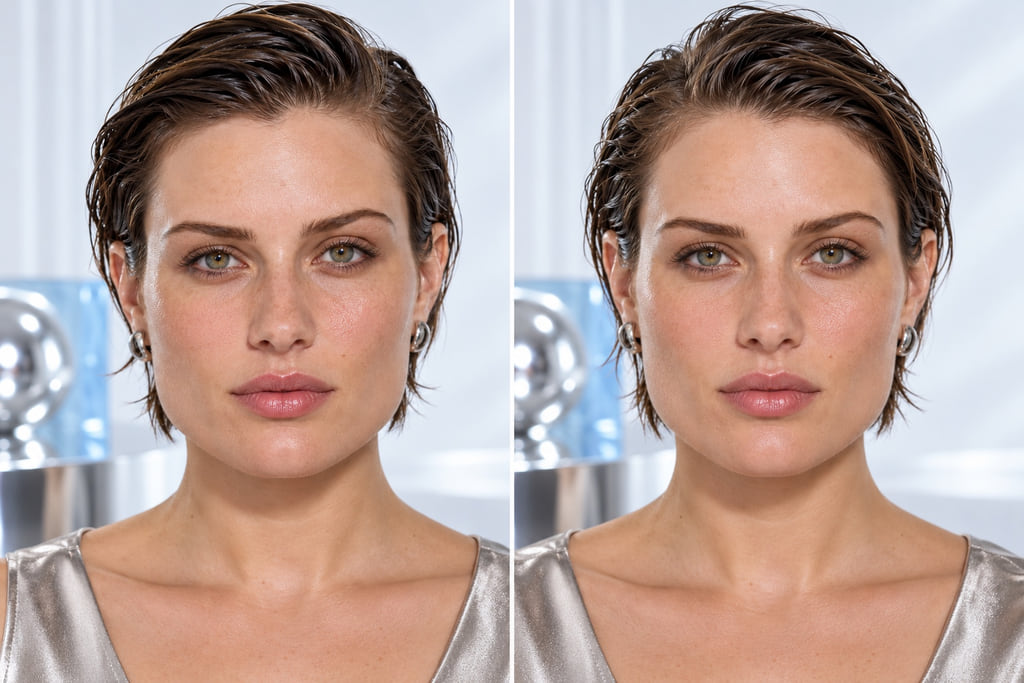
You might enjoy emphasizing a structured line with a crisp part or exploring a softer line of hair around your face. Both are choices, not rules assigned by a shape label. Zenni presents face shape styling as possibilities and gives personal preference room to lead. There is no requirement to soften an angular jaw.
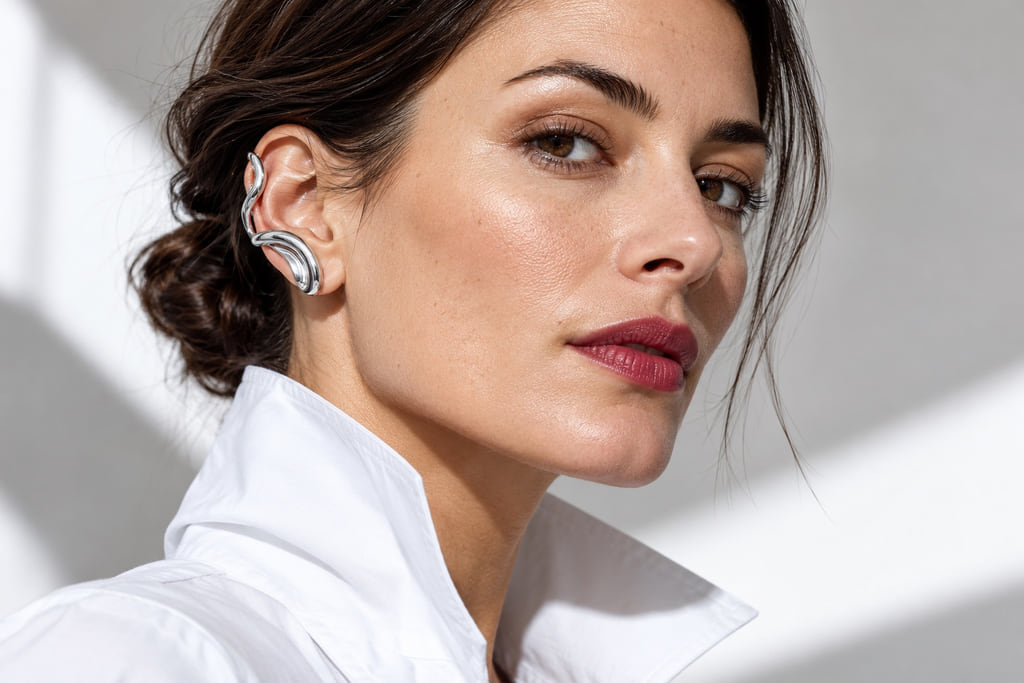
Write down the detail you want to try next: a hair part, a collar, or a frame silhouette. The Style Notebook starts with those preferences. You can explore a look because you like it, whether or not you keep “square” as your description.
Your next question
Does square mean a ninety-degree jaw?
No numerical jaw angle is part of the description used here. Zenni’s guide uses the qualitative phrase “strong jawline.” This page asks you to notice a contour, not to measure a bone angle.
Must I soften a square outline?
No. Shape-based style suggestions are optional. If you like a structured look, keep it; if you want to try a softer line, that is your choice too.