Find frames you enjoy
Explore frame shape alongside comfort, bridge fit and personal taste. A face shape label should not make the decision for you.
Explore face shapes ↗A frame can be a practical object and a style choice at the same time. Start with what feels good to wear and what you like seeing.
Start with fit
If you are looking for eyeglasses for face shape, begin with the frame itself. Warby Parker lists three distinct dimensions, usually given in millimeters: lens width, bridge width and temple length. A marking such as 50–18–140 illustrates the order of those numbers; it is an example of the format, not a size recommendation for you.

If you already have a pair you enjoy wearing, compare its marked dimensions with a frame you are considering. Then try the new pair on and notice how it sits as you move through an ordinary day. A face shape word cannot tell you your bridge width or replace that fitting step. For language to describe the outline you see, Start observing.
Compare silhouettes as choices
Frame shape can change the mood of a look without changing your face. A fine metal outline may feel quiet to you; a more visible acetate frame may be the detail you want to show. Warby Parker says there is no mathematical formula for the best-looking pair. Compare silhouettes as personal options rather than ranking them by a face shape label.
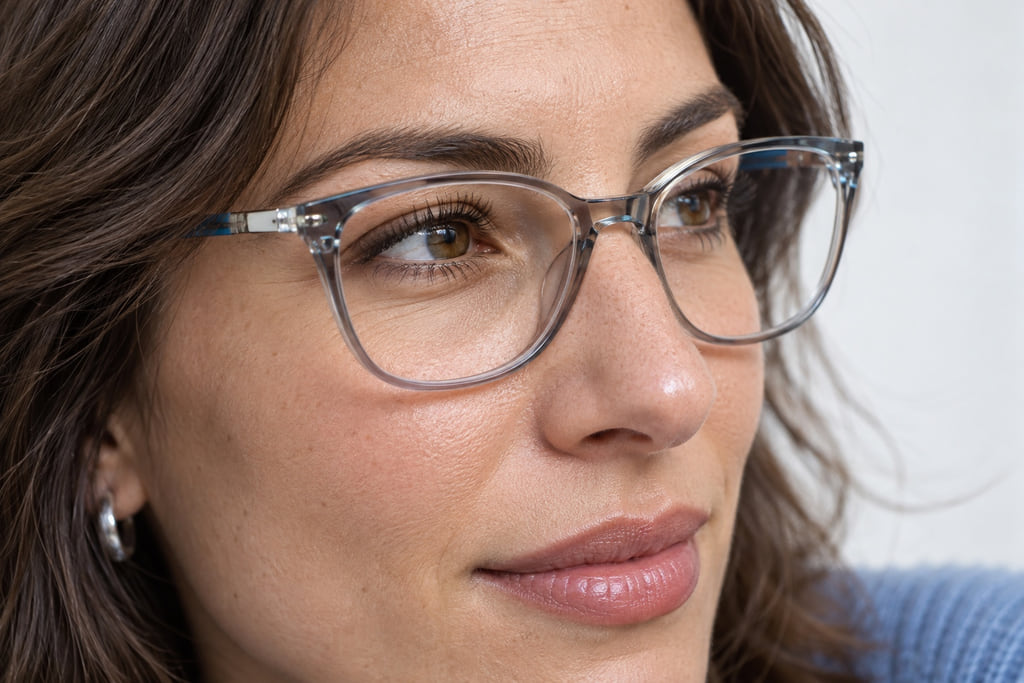
Zenni Optical presents its face shape suggestions as possibilities, with room for your own preference. You can like a rounded frame with a rounded outline. You can also prefer a different pairing. Neither choice needs a geometry rule to justify it. If descriptive shape words help you compare ideas, Explore face shapes.
Try them in everyday conditions
Keep three questions separate when you try a pair: Do you like its silhouette? How does the frame sit on you? What lenses or prescription do you need? This guide can help you ask about frame dimensions and describe a style preference. A photograph cannot answer how a pair will feel after wear, and a shape label cannot specify lenses or a prescription.
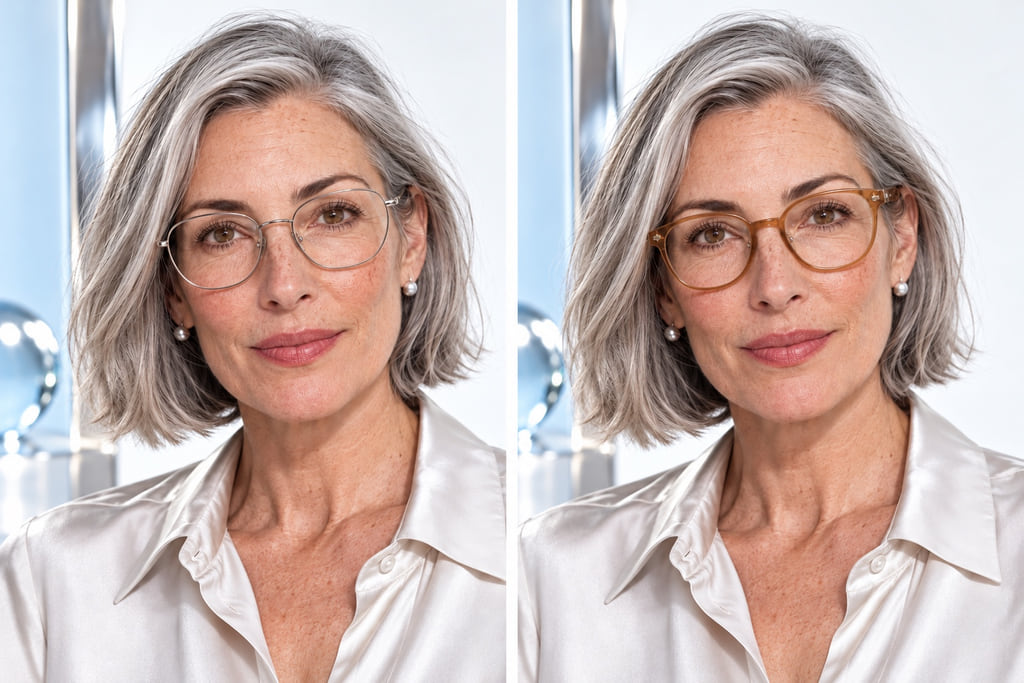
Save two pairs that appeal to you, then note what you notice during a try-on: the outline you enjoy, how each frame sits, and any questions to take to an eyewear professional. The amber pair in the portrait above is one styling choice, not a universal answer for anyone with a similar face outline.
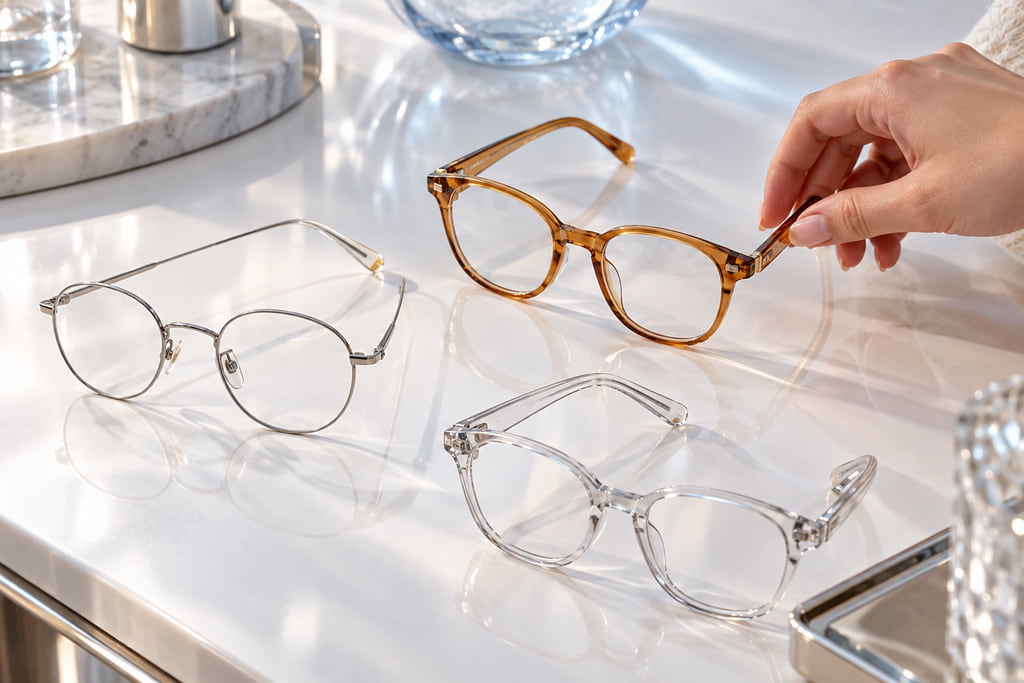
A short try-on note
- Two frames I want to compare: ______
- What I like about each silhouette: ______
- How each feels when I try it on: ______
- Questions about fit or lenses: ______
Your next question
Can a shape label tell me my frame size?
No. Lens width, bridge width and temple length are dimensions of a particular frame. Compare those numbers with a pair you know, then check a new pair when you try it on. Warby Parker explains these dimensions in its fit guide.
Must my frames contrast with my face?
No. There is no formula requiring contrast. Warby Parker describes frame choice without a mathematical rule; your preference can lead the decision.