Find your fringe direction
Compare curtain, blunt and side-swept fringe with your texture, growth pattern and everyday routine in mind. Start with what you would enjoy wearing.
Explore face shapes ↗
Compare the fringe options
01 / PlacementIf you are asking which bangs might suit your face shape, begin with where the hair sits. Wella describes classic bangs as trimmed straight across the front. That creates a clear line of hair, but it is a style choice rather than a rule for changing the look of any particular face.
The same Wella guide describes wispy fringe as something you can wear across the forehead, part in the middle or sweep to one side. Curtain bangs and side-swept fringe offer different ways to place the front pieces. Notice which arrangement you like on yourself before asking a shape label to choose for you.
For words to describe the proportions you see, Start observing. A description can help you express a preference; it does not need to settle the haircut.
Work with your hair
02 / TextureNot every soft-looking fringe has the same outline. Wella describes bottleneck bangs with a shorter middle and longer sides. That is a useful description to bring to a stylist if you like that particular transition. It does not mean that everyone with a similar face outline will want it.

Your natural texture, the way the front hair grows and the time you enjoy spending on styling are more useful questions than a universal “best bangs” list. Hair.com recommends discussing hair texture and your daily routine when talking through a haircut. Ask how the proposed fringe would sit with your own hair on an ordinary day.
If you want a broader vocabulary for your visible outline, Explore face shapes. You can keep more than one description in mind while making a hair choice.
Try a reversible preview
03 / ChoiceBefore committing to a cut, gather two references that show different placements you might enjoy. For example, you may like a middle part on one day and want to move the front pieces toward the side on another. Compare the hair arrangement, not a promise that it will correct your face.
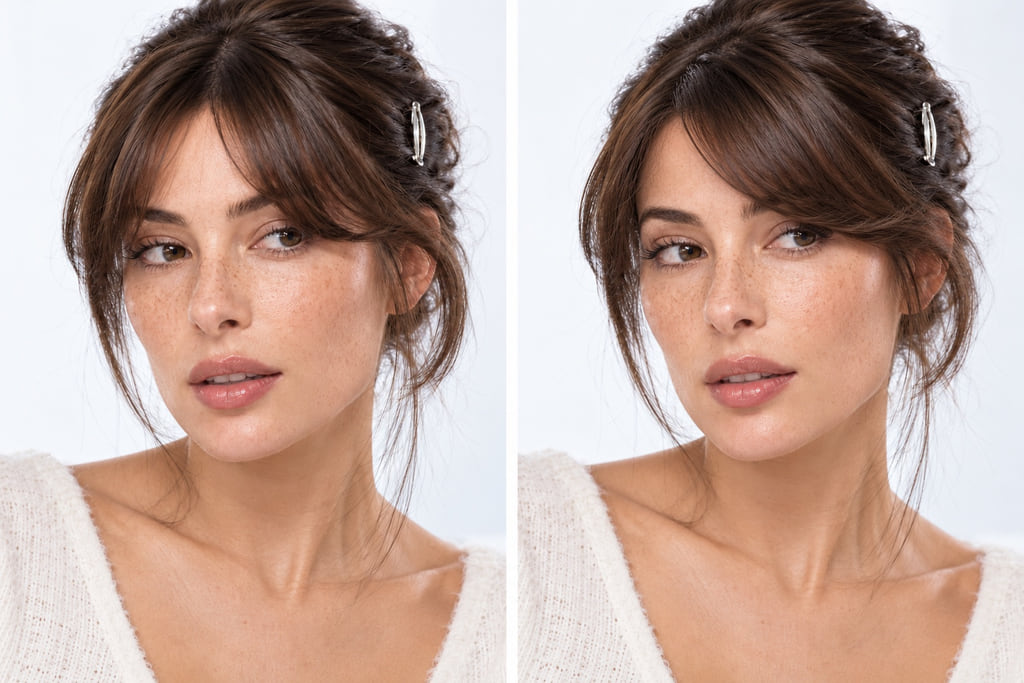
Bring the references to a stylist and ask how the front hair is likely to fall with your natural texture and growth pattern. Ask what the everyday styling would involve for the version you prefer. The answer is about your hair and routine, not a mandatory choice for your face shape.

Take these questions along
- Where would I like the front pieces to fall?
- How might this sit with my natural texture and growth pattern?
- What would I want to do with it on a typical morning?
Your next question
Are all bangs the same cut?
No. Wella distinguishes straight-across classic bangs from bottleneck bangs, which have a shorter center and longer sides. You can use those details to describe the look you mean.
What should I ask before cutting bangs?
Ask how the front hair may sit with your natural texture and what styling it would take in your daily routine. Hair.com includes both texture and routine in its advice for a haircut consultation.