More than one description
If more than one face shape description feels useful, keep both. You can explore styling choices without forcing a single label.
Explore face shapes ↗A useful note about your face can be specific without becoming a final category.
Keep the observations separate
Start with what you notice in each area. You might write, “My forehead looks wider than my lower face.” That resembles the language in Zenni Optical’s heart-shape description, which pairs a wider forehead with a narrower chin. It is a comparison of visible outlines, not a measurement you need to pass.

Your next note might be about the cheekbone area. Zenni’s diamond description emphasizes prominent cheekbones with a narrower forehead and jawline. If both descriptions help you put observations into words, you can keep both notes. They do not establish a separate, scientifically defined “mixed” class. For a simple way to record what you see, Start observing with the checklist.
Avoid forcing a label
“Mixed face shape,” “combination face shape” and “hybrid face shape” can be everyday shorthand for feeling between two descriptions. You can use whichever words are helpful, or skip them. Zenni presents its shape-based frame suggestions as possibilities rather than rules, so the descriptions do not have to settle your styling choices.
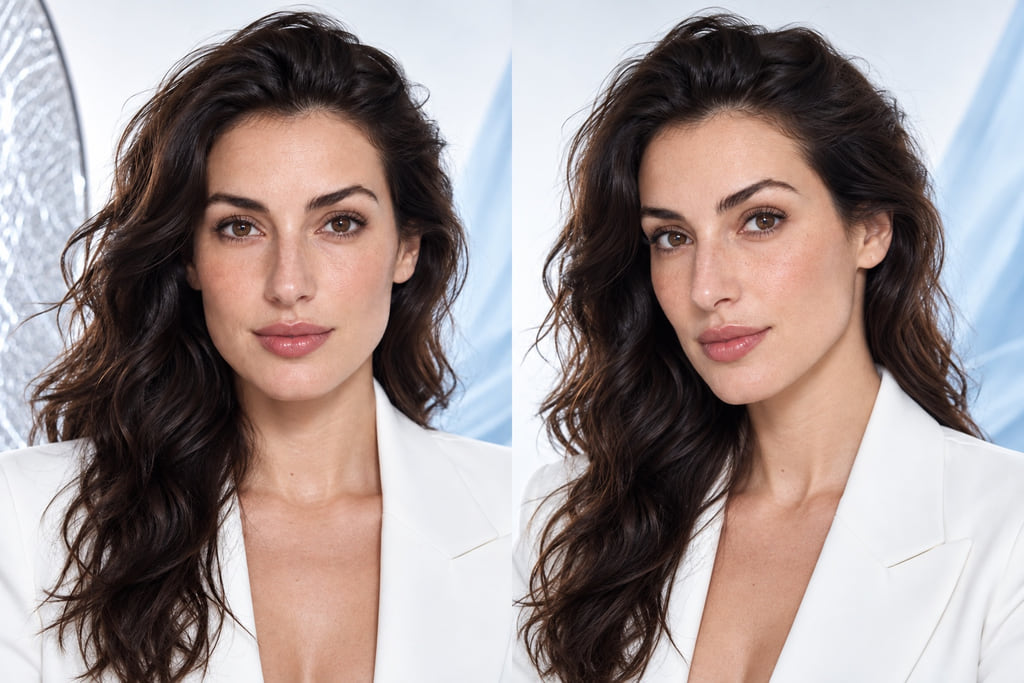
Consider eyeglasses. Warby Parker’s guide says there is no mathematical formula for the pair that looks best. A frame you enjoy wearing can be worth trying whether one face-shape label, two labels or neither feels right. Shape guides give you vocabulary for exploring options; your preference remains the decision point.
Choose a personal experiment
If you want to compare the descriptions more closely, read the heart profile’s forehead-to-chin description and the diamond profile’s cheekbone-to-jaw description. Notice which parts of each entry help you describe your own view. Neither profile needs to produce a final answer. You can also Explore face shapes across the atlas for more descriptive language.

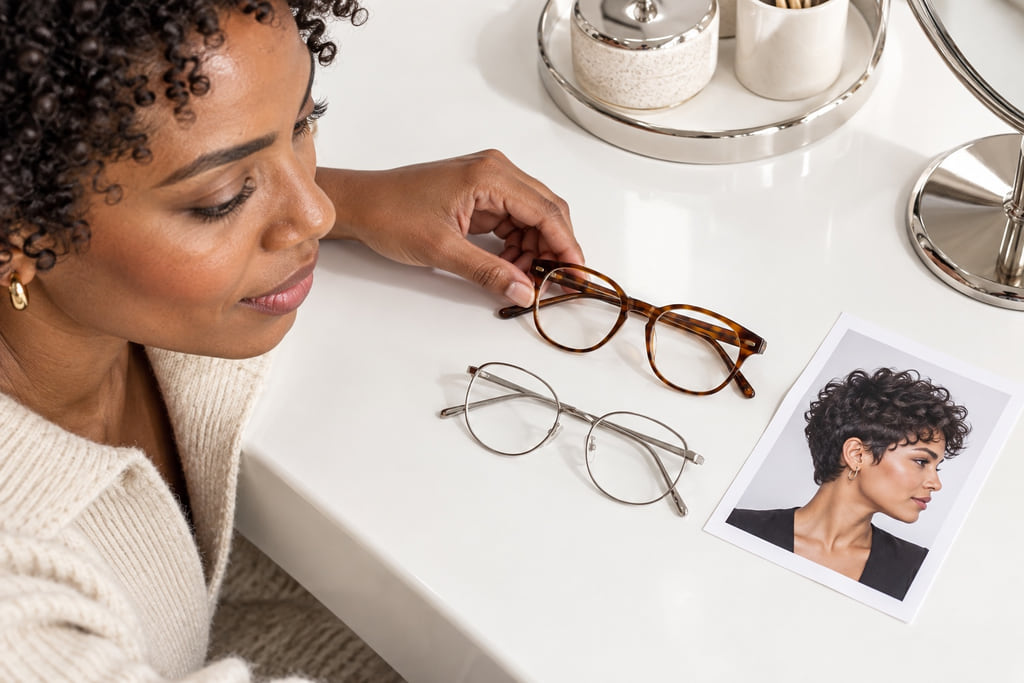
Then choose one styling detail to try: save a haircut with a length you like, move your hair part, or try on a frame that catches your eye. Write down what you prefer about it. That note is useful even if you never decide whether your face is “two shapes.”
Your next question
Is mixed a new diagnostic category?
No. Here, “mixed” is a way to keep more than one observation in view, such as a broad forehead and noticeable cheekbones. Zenni describes heart and diamond shapes separately; that guide does not establish a new diagnostic category between them.
Do I need one label before choosing glasses?
No. Warby Parker says there is no mathematical formula for the best-looking pair. Begin with frames you would like to wear, then use shape descriptions only if they help you compare options.