17 cuts for a fresh look
For a fresh look, compare what you want to change: the length, the front pieces, the outline or the daily styling. These 17 haircut ideas offer starting points for that conversation. Choose a look you enjoy wearing rather than asking a haircut to change your age.
Compare the options ↗Your preferred length, your texture, your everyday routine.
Short cuts to compare
1. Close crop. Start with the outline above the ears and at the neckline. Show a front and side reference, and ask which details would need attention between appointments. This is a direction for someone who wants less length, not a promise of less upkeep.
2. Textured pixie. Look at the top and fringe separately. Do you like loose pieces or a neater finish? Tell your stylist how you would normally dry the cut and ask how much of the reference comes from styling.
3. Longer pixie. If you like a crop but want pieces around the ears, mark those details on your reference. Compare how it looks tucked back and worn forward. The word pixie does not specify one exact shape.
4. Bixie. Use this as a starting label for a look between a bob and a pixie. Bring the reference that made you interested: one may keep a longer front while another emphasizes a short back. Ask which features would carry over to your hair.
Bobs and mid-length cuts
5. Chin-length bob. Decide where you want the ends to sit, then compare a blunt line with a softer finish. Show the length on yourself before choosing. A bob can be discussed alongside a round face description without treating the description as a rule.
6. Jaw-length wavy bob. Separate the ending length from the wave in the reference. Ask your stylist what it would look like with your normal texture and whether you would want to recreate that particular finish.
7. Side-parted bob. Try your usual part and the proposed side part before deciding on front length. Tell the stylist if you want to tuck one side away. Keep the haircut request and the styling request distinct.
8. Bob with a fringe. Compare the bottom line of the bob and the front line as two choices. A parted fringe, a straight line and a loose sweep give different references to discuss. You do not have to choose both length and fringe in the same appointment.
9. Long bob. Mark where the ends should fall. If tying your hair back matters, ask which pieces would reach and which would stay loose. This makes the conversation more useful than simply asking for a lob.
10. Shoulder-length cut. Start with the outline at the shoulders and the front. Show a reference worn the way you intend to wear it, rather than relying only on a salon finish. Ask about the cut on an ordinary wash day.
Layers and natural texture
11. Layered shag. Compare the front, crown and perimeter in your reference. Which part of that outline do you like? Ask your stylist how the proposed layers would sit with your hair and the finish you want.
12. Curly shag. Pick references with visible curl detail. Ask about the outline with your usual texture, not only the silhouette of a styled photo. For a shape-specific discussion, see haircut options for diamond faces.
13. Rounded curly cut. Save a front and side view showing the outer shape. Explain where you want to keep fullness and where you want a different outline. Your stylist can discuss those preferences with your own curl pattern visible.
14. Long layers. Set a limit on the overall length you are willing to lose. Discuss the shorter pieces separately. If your goal is a change at the front, ask whether you want that change throughout the cut or just around your face.
15. Long hair with face-framing pieces. Keep the back length in the conversation, but focus the reference on where the front begins. Compare pieces near the cheek, jaw and below it. Choose the placement you enjoy.
Fringe changes
16. A cut with curtain bangs. Use a reference to show the opening and the transition into the sides. Tell your stylist which part you normally wear and how you want the front to sit when you tie the rest back.
17. A cut with a side-swept fringe. Decide which side you prefer and how far the front should fall. Try arranging the hair you have as a way to explain the direction. The fringe guide helps you compare front lines.
Choose two, then ask about upkeep
Choose one reference for length and another for a detail you want to change. You might like a short back in one photo and a longer front in another. Explain the combination, then ask your stylist what it would involve for your hair. You do not need to select all 17 or rank them by age.
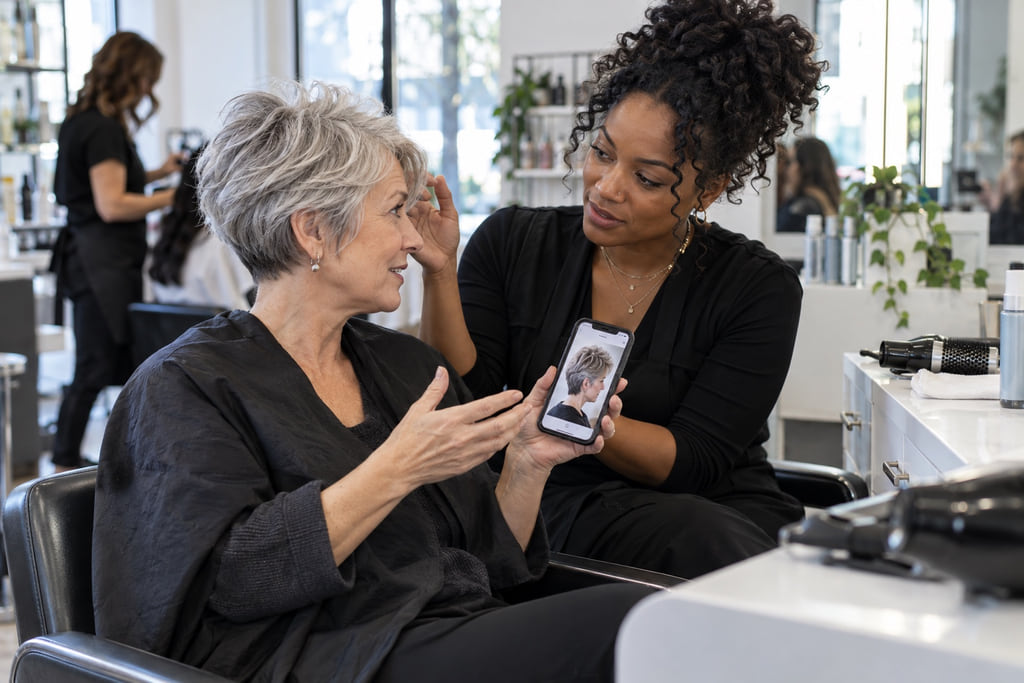
Hair.com recommends bringing haircut photos and discussing your routine. Add your usual drying method, the time you want to spend styling and any need to tie your hair back. Ask when the particular outline would need a trim, rather than assuming the shortest cut is the easiest.
Does a cut guarantee a younger appearance? This guide makes no such promise. Its purpose is to help you compare a change you would enjoy. Should gray hair change the shortlist? Start with the length, texture and finish you want to wear; keeping your color can be part of the plan.