- Key Takeaways
- Identifying your diamond face shape
- 1\. The cheekbones
- 2\. The forehead
- 3\. The jawline
- 4\. The face length
- The core styling principle
- Soften angles
- Add volume
- Balance proportions
- Flattering diamond face haircuts
- Short styles
- Medium styles
- Long styles
- The role of bangs
- Side-swept
- Wispy fringe
- Curtain bangs
- Styles that require careful thought
- Beyond the cut
- Color placement
- Texture and styling
- Parting your hair
- Conclusion
- Frequently Asked Questions
- How do I know if I have a diamond face shape?
- What is the key haircut goal for diamond faces?
- Which haircuts flatter diamond face shapes most?
- Do bangs work for diamond faces?
- Are short styles okay for diamond faces?
- Which styles should I approach with care?
- What styling tips help beyond the cut?
Key Takeaways
- Determine if you have a diamond face through the widest-at-the-cheekbones width, a narrower width at both the forehead and chin, and a face length longer than its width. Make a quick checklist against other face shapes.
- Stick to the softening angles and balancing width rule. Pick layered cuts, soft curls, and volume at the crown or near the sides to balance proportions.
- Stay away from blunt, ultra-short, or slicked back styles that emphasize sharp cheekbones and reveal a pinched forehead or chin. Avoid pin-straight, flat a’ la strict center parts that elongate the face.
- Experiment with short textured pixies, cheekbone-grazing bobs, shoulder-length lobs with waves, or long layers with side-swept fringe. Employ side parts to bring width and direct the eye.
- Go for bangs – side-swept, wispy, or curtain – to soften the forehead and show off your eyes and cheekbones. Maintain thickness light to not overpower the face.
- Boost results beyond the cut with cheekbone highlights, lighter tones at the crown or sides, and textured styling with mousse or spray. It stays in shape with frequent trims and straightforward daily volumizing.
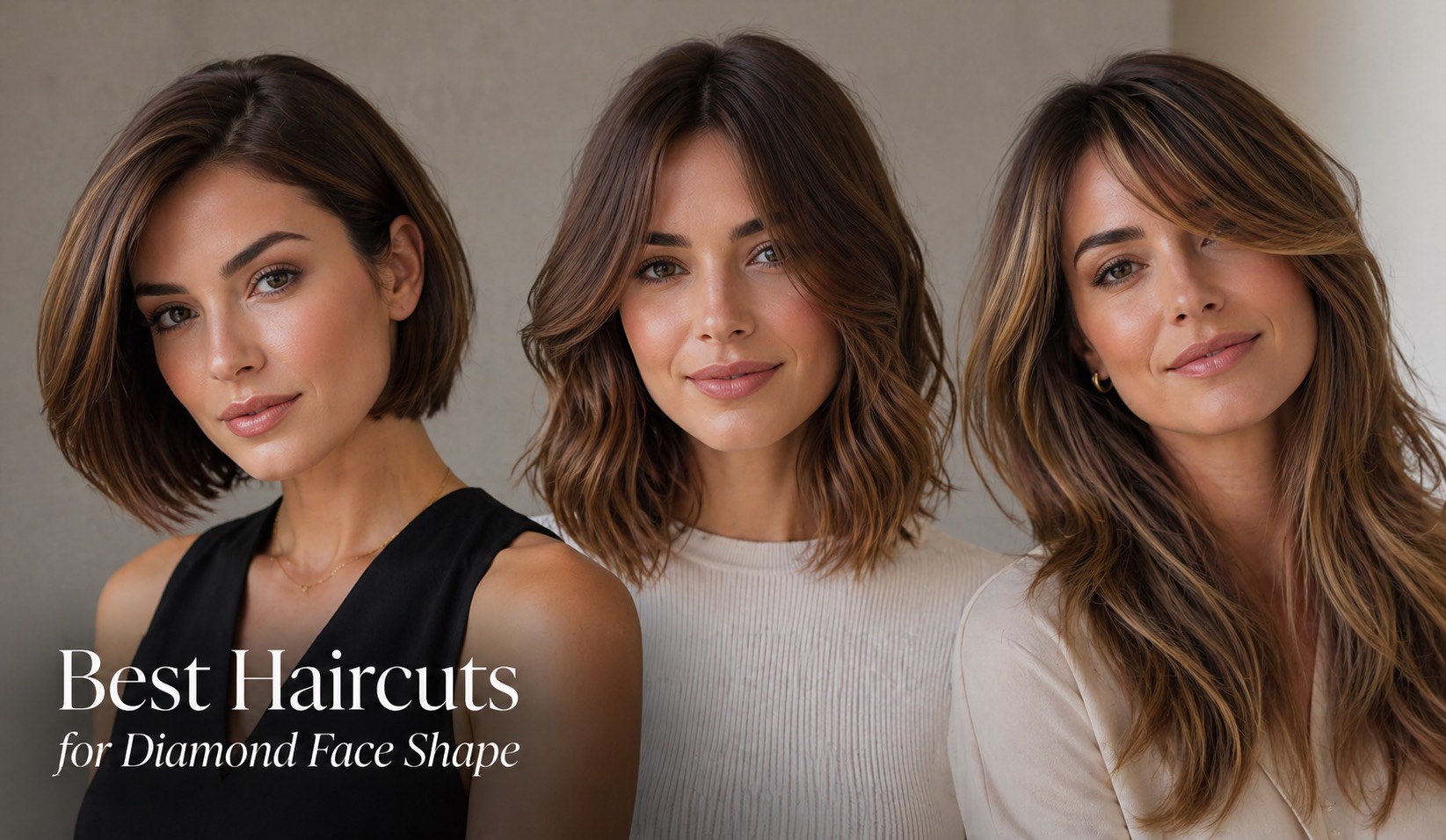
Diamond face haircuts are those that complement a narrow chin and forehead combined with wide cheekbones.
Short bobs with soft layers minimize width at the cheeks. Side-swept bangs help to shorten a high forehead and draw attention to the eyes. Long layers beyond the shoulder add weight close to the jaw for crisp lines. Curls or waves at mid-lengths soften sharp angles.
For a no-nonsense guide, the following sections demystify lengths, fringe types, and styling tips with straightforward examples.
Identifying your diamond face shape
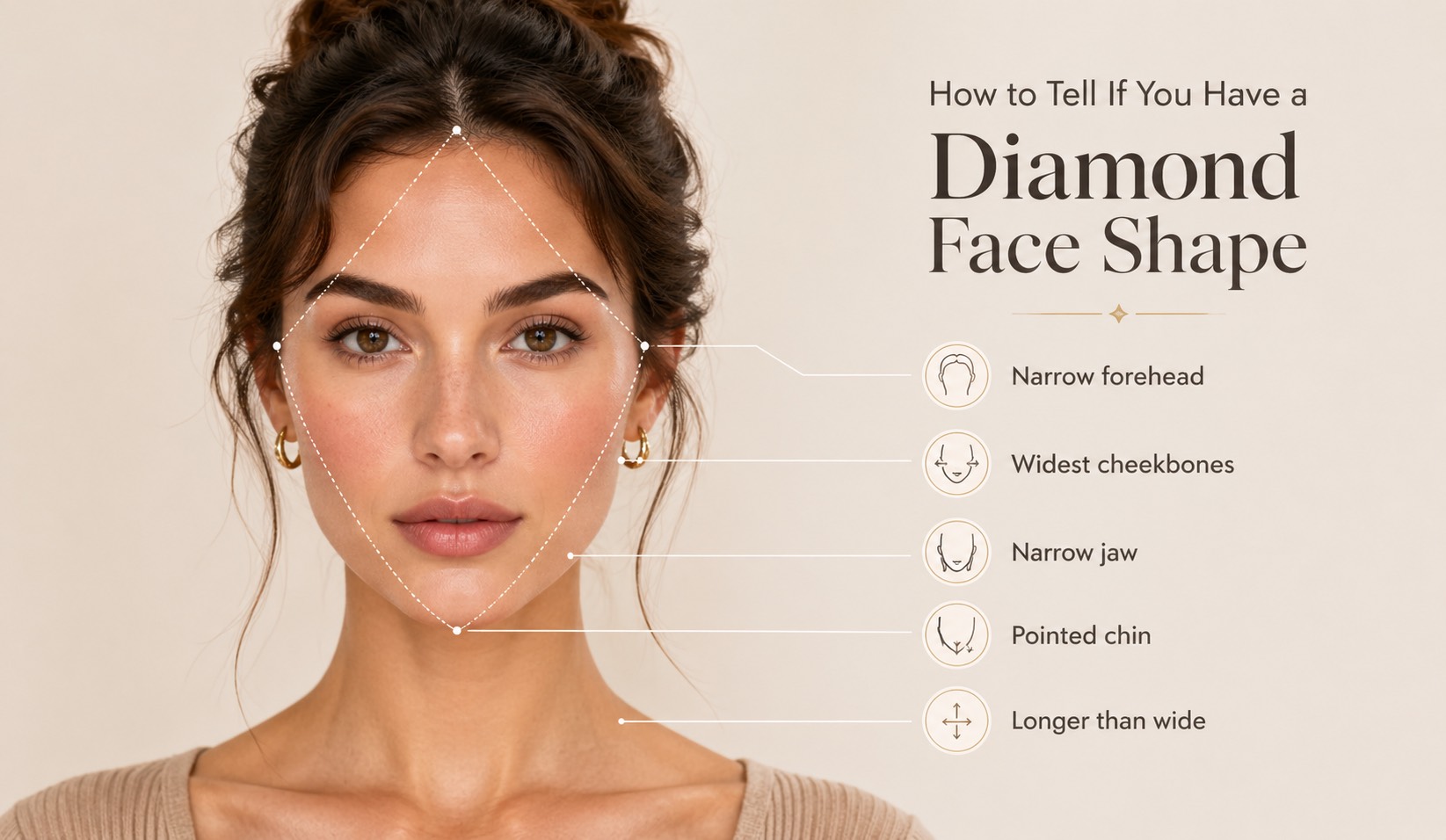
Begin with an easy once-over in the mirror. Compare the width of your cheekbones, forehead and jaw. A diamond face has the cheekbones as the widest point, accompanied by a narrower forehead and jawline, along with a chin that frequently tapers to a point.
Your face is typically longer than it is wide, with sharp, angular edges. Divide your face into top and bottom halves and check if both naturally taper in toward the center. Most of us find a combination of shapes, and that’s okay.
The cheekbones
High, prominent cheekbones that sit forward and register as the widest point are the giveaway. If the midface outshines both your forehead and jaw, you’re in diamond territory.
Follow the arc with your fingers from the ear line to the nose. You should sense a solid ridge high on the face, not low toward the jaw. In good light, this area can snag a natural highlight without makeup, which sharpens the diamond outline.
Think Halle Berry, J-Lo, and Kate Hudson as classic examples.
The forehead
See if your forehead is narrower than your cheekbones. A little point at the hairline or widow’s peak is common. The temples are often quite narrow in width, so the upper face appears trim instead of wide.
It’s flatter than it is oval or oblong, with a somewhat shorter forehead that makes the cheekbones more prominent.
The jawline
Look for a jaw that tapers to a pointed or fine chin. The edge is soft, not boxy. Angles exist but are not heavy.
When you look at the relative widths, your jaw should be significantly narrower than your cheekbones. This contrast shapes the diamond silhouette and informs cut decisions that create volume around the jaw.
The face length
Measure hairline to chin, then across widest cheek point (use millimetres). Diamond faces are longer than they are wide, with the cheekbones being the obvious width apex.
List numbers: forehead width, cheekbone width, jaw width, face length. The shape in the mirror should resemble a long diamond.
If you fall between shapes, lean toward the shape that fits most traits. For balance down the road, consider face-framing layers and side-swept bangs or bring volume around the jaw.
The core styling principle
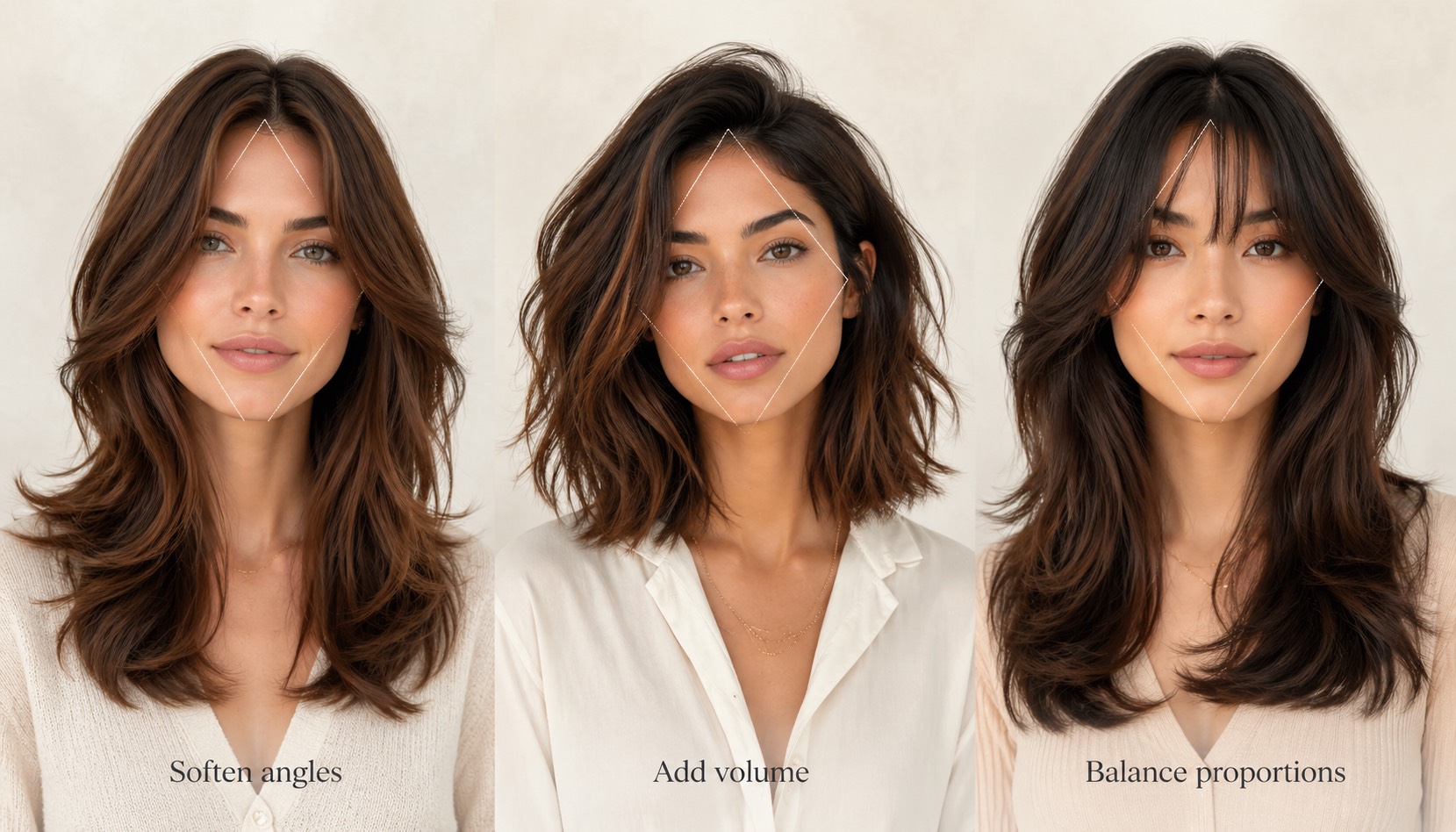
Diamond face shapes glow when hairstyles observe the principles of proportion, balance, and harmony. To enhance natural beauty, try to soften angularity and expand where the face contracts, directing the eye to a peaceful center, typically the eyes or mouth, allowing cheekbones to appear sculpted but not severe.
Soften angles
Opt for fluid shapes rather than hard lines when choosing a haircut. Layered hairstyles, soft curls, and feathered ends can soften edges and reduce sharpness around pointed chins. A long shag with wispy layers or a shoulder-length cut featuring loose waves can maintain motion and buoyancy, making it ideal for individuals with a diamond face shape.
Avoid blunt bobs, straight-across bangs, and harsh undercuts that emphasize the jawline and create an unflattering silhouette. Instead, consider face-framing layers that begin around the cheekbones to soften the overall appearance. Using a light mousse or curl cream adds rhythm without crunch, while diagonal waves or side-swept fringes can slim length and ease width effectively.
To create a halo effect, opt for warmer, lighter tones around the hairline, which can provide an illusion of space and enhance your natural beauty.
Add volume
Volume where it counts balances a narrow forehead and chin. Create lift at the crown with a round brush and heat-safe mousse, or set velcro rollers high to add height without bulk on the cheeks.
Textured bobs, tousled lobs, or collarbone waves bring dimension and keep the eye intrigued. Steer clear of pin-straight flat styles that simply drag the face down. Highlighting the very top with a bit of lighter color provides balance by adding visual volume and lifts the focus up.
Balance proportions
The key to styling long layers and soft side parts broadens the forehead and smooths the jaw, pushing the face toward the all-time popular oval standard.
With cheekbones that run high, deflect attention off center with asymmetry. Balance can be symmetric or asymmetric. Both work if harmony, the pleasing mix of length, weight, and line, holds.
- Side-parted lob with cheek-grazing layers
- Long layers with side-swept bangs, faint crown highlights
- Curly shag with tapered ends, airy volume on top
- Textured pixie with lifted crown and soft, diagonal fringe
Flattering diamond face haircuts
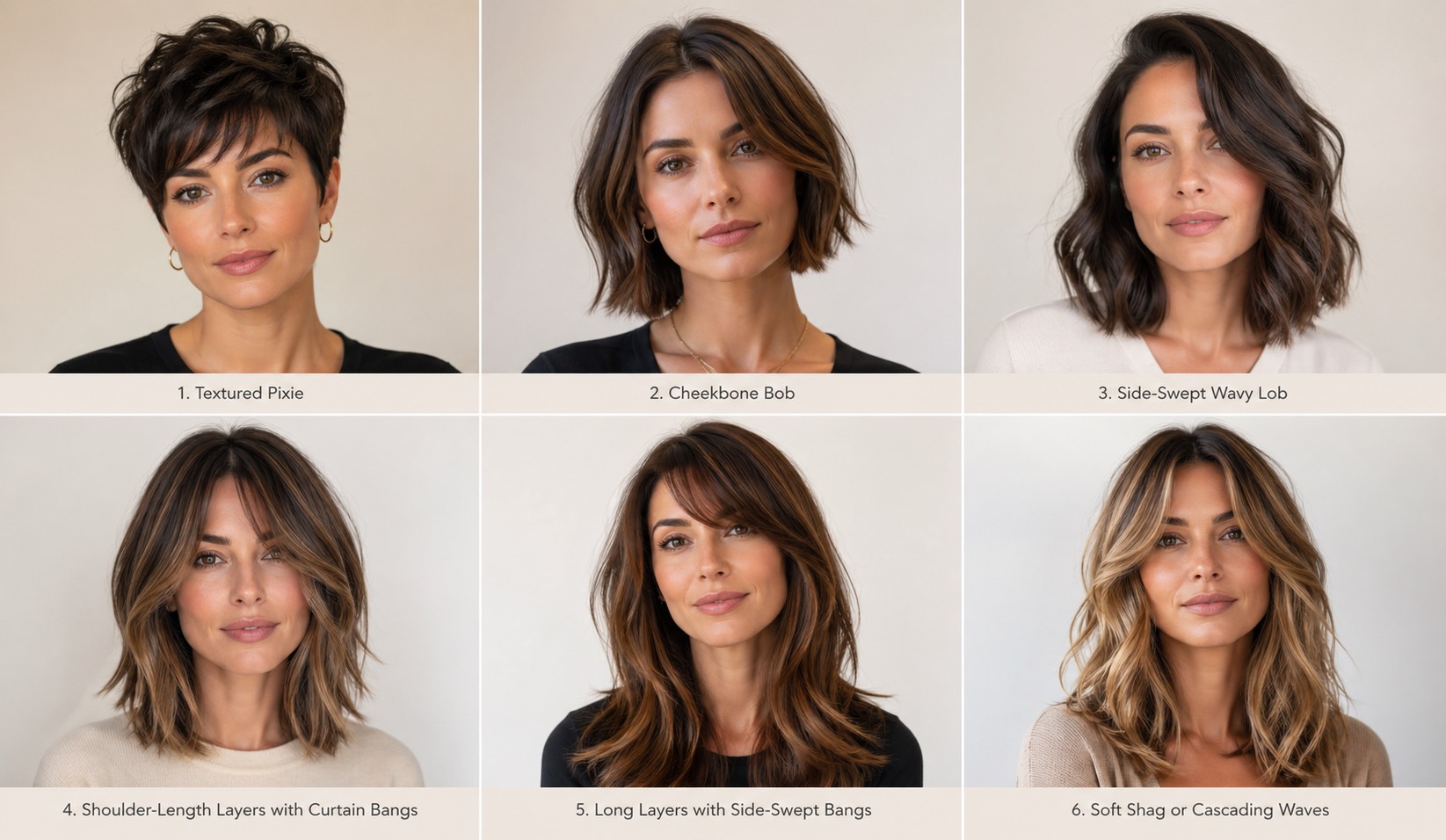
To achieve a good face shape, aim to bring width at the forehead area and jaw while maintaining defined cheekbones. Soft edges, height at the crown, and light movement help enhance the overall silhouette for both men and women. Popular hairstyles like layered pixies and sleek lobs work well across various hair types, from fine and straight to thick and curly.
Short styles
A pixie cut with lift at the crown balances narrow foreheads and sharp cheekbones. Sides are neat, not tight. Choppy layers on top make the shape feel light, not boxy.
A textured bob that falls just below the cheekbones frames the face without slicing into the widest point. A chin-length bob does the trick, particularly if you make a soft side part and add just a touch of wave to create width near the jaw.
Avoid ultra-short, blunt crops. They elongate angles and tone down the softness that complements a diamond shape.
Tousled, layered short hair reads relaxed and chic. Touch up piecey tips with a matte paste and flip ends outward to broaden the jaw line. For the guys, a quiff or mid fade with texture on top creates height and soft contrast.
Medium styles
Shoulder-grazing lobs with loose waves even things out by balancing the cheekbones and adding a sense of relaxed sophistication. Flattering diamond face hairstyles include a side-swept wavy lob that nails a laid-back day with structure.
Include long layers or go with an angled bob that can maintain movement at the ends and soften a pointed chin. Curtain bangs and mid lengths go hand in hand, opening the face and adding width at the temples.
Medium cuts flex from daily wear to formal events with simple styling shifts: smooth and tucked for polish or diffused waves for a fuller frame.
Long styles
Long layers or cascading waves lengthen the neck and take the edge off. A deep side part or side-swept bangs help break up length and add width where you need it.
Steer clear of pin-straight, flat lengths that emphasize angles. Go for a straight long layered cut instead. It maintains flow, adds lift, and retains shape with airy products.
Romantic, voluminous long looks flatter both fine and thick hair. Air-dry with mousse for body or set loose curls to generate balanced width. With airy, face-framing wings that really make the eyes pop and soften cheekbones, a butterfly cut is flattery in a style.
| Hair length | Options for diamond faces |
|---|---|
| Short | Layered pixie; quiff; mid fade with texture; chin-length bob |
| Medium | Side-swept wavy lob; angled bob; shoulder-length layers; curtain bangs |
| Long | Long layers; cascading waves; butterfly cut; straight long layered |
The role of bangs
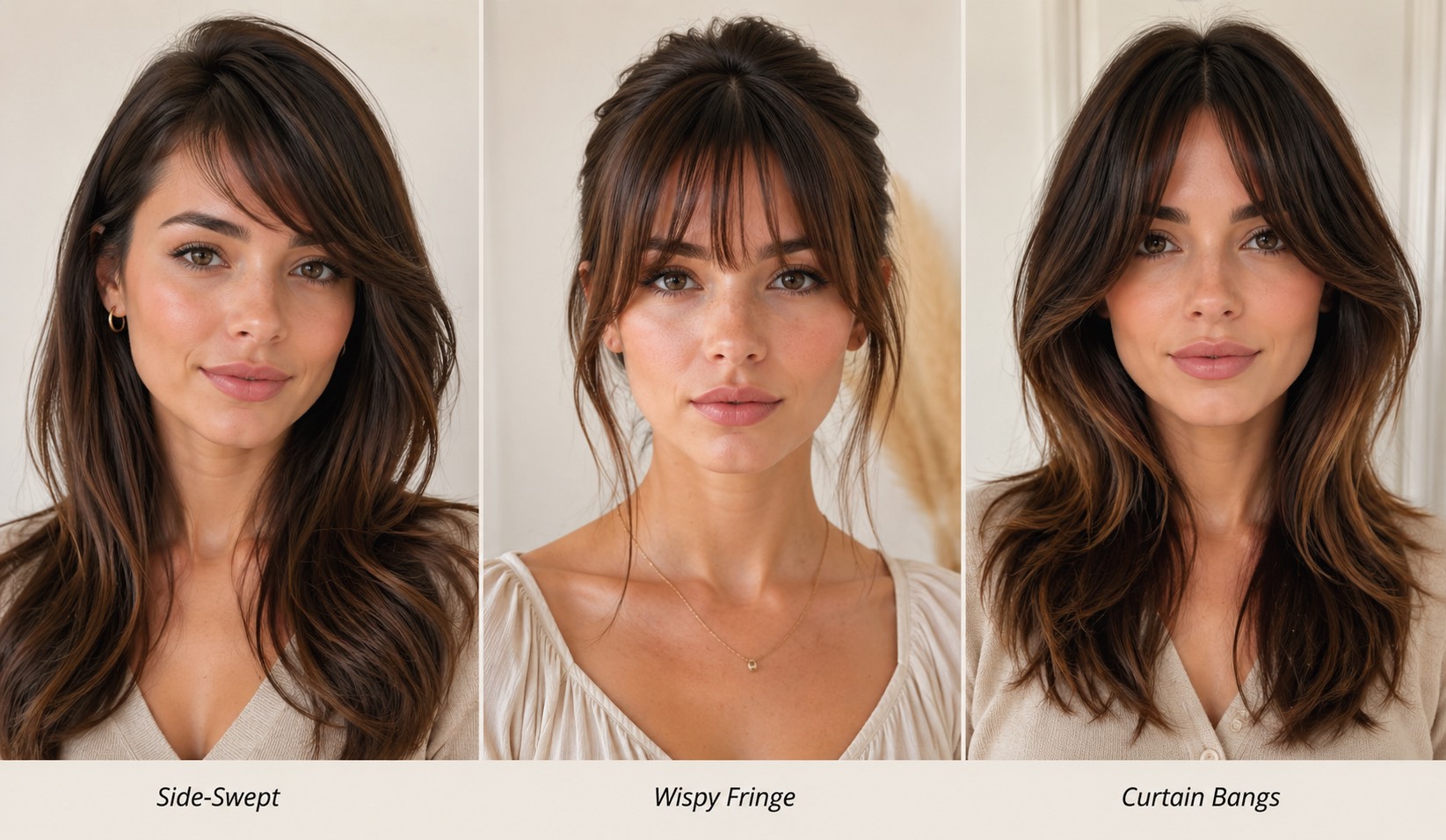
Bangs can transform a diamond face by softening prominent cheekbones, broadening a slender forehead and directing the gaze inward. The right bang pulls the face into a gentle oval, but the wrong cut can square in or truncate. Side-swept bangs, wispy bangs and curtain bangs are your friends, while blunt, straight-across bangs are not.
Match bang type to hair texture and styling time, and consult a stylist who can map length in millimeters to your facial points and compensate for weight in curl, wave or straight hair, and so on.
Side-swept
Side-swept bangs direct attention to the eyes and soften the brow line. A deep sweep can balance out prominent cheekbones and add a soft asymmetry, which complements diamond-shaped faces.
Steer clear of super thick side bangs as well. Heavy weight tends to overwhelm petite features and battle natural growth patterns. Pair them with layered cuts, long layers at 5 to 7 cm below the chin, and a soft face-frame at the lips.
Incorporate a deep side part to enhance balance and form a relaxed, sloped silhouette that feels contemporary. For a trial run, go for a loose, Korean see-thru sweep. It supplies air and motion minus the full dedication.
Wispy fringe
Light airy wispy bangs add softness without closing the face. They dissolve nicely into the soft layers, swaying as a single piece and maintaining the look effortless and understated.
They work well for fine hair, as they don’t create weight at the forehead. Note: very thin, sparse wisps can stretch the face visually and make it look longer. Shoot for light, not frail.
There’s something about this style that gives you a youthful edge and a soft, romantic vibe, especially when the ends brush the brows.
Curtain bangs
Curtain bangs frame the face and highlight your cheekbones while softening width. A center part maintains symmetry, and the split opens the face and draws attention inward.
Pair with medium or long layers so the curtain still flows into the cut. Consider lengths that skim your cheekbone and drop to your collarbone for equilibrium.
About: Bangs should be trimmed often to maintain the arc and keep out of the eyes. Avoid blunt, straight-across cuts because they can broaden cheekbones and make the chin appear narrow. Curtain bangs remain soft, flowing, and forgiving.
Styles that require careful thought
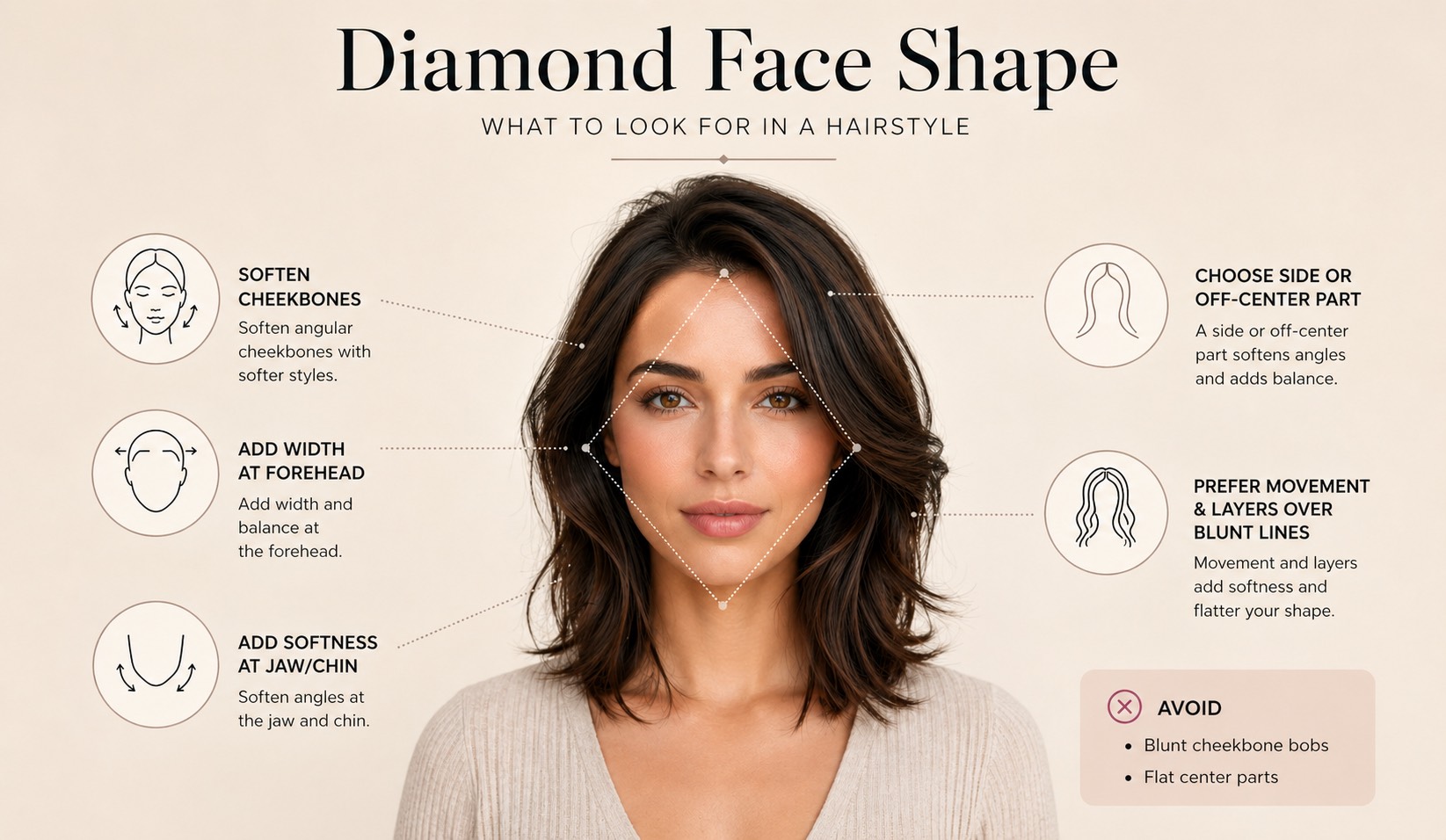
Diamond face haircuts seek to balance strong cheekbones, a narrow forehead, and a pointed chin. The objective is to diffuse angles and keep the eye moving around the face, not straight down it.
Blunt cuts or styles that highlight sharp cheekbones and pointed chins can appear severe. One-length bobs that hit at the cheekbone can box in the face. A sharp, blunt fringe can slant the brow line and make the forehead appear tighter. Softer lines are more effective.
Think light, feathered edges on a lob or a long cut with face-framing layers that fall at the mouth corners. Layers provide air and form, but do not pile too high at the cheeks.
Ultra-short or slicked-back styles demand maintenance. That’s because a cropped pixie with tight sides can reveal the narrow forehead and jawline, placing all of the emphasis on the center of the face.
If you adore short hair, maintain a little lift at the crown and softness at the hairline. A tousled pixie with side bangs assists. Slicked-back hair can work if you leave a suggestion of volume at the crown and some texture around the temples, so the head does not appear elongated and thin.
Center parts with flat, straight hair can lengthen the face too much. A soft off-center or side part breaks the symmetry and balances the widest point at the cheeks.
Side-swept bangs work well here, as they create a diagonal line that shortens the face and softens the angles. Curtain bangs can assist if they open at the brow and melt into cheek-skimming layers.
Checklist to approach with caution:
- Blunt bobs at cheekbone level
- Heavy, straight-across bangs
- Ultra-short crops with tight sides
- Slicked-back styles with zero crown lift
- Center parts on pin-straight, flat hair
- Super long, unlayered lengths past 40 cm without volume
- Updos with severe, pulled-tight sides
- Topknots stacked high without soft tendrils
- Over-layered cuts that puff at the cheeks
- Any cut that fights your style and confidence
Beyond the cut
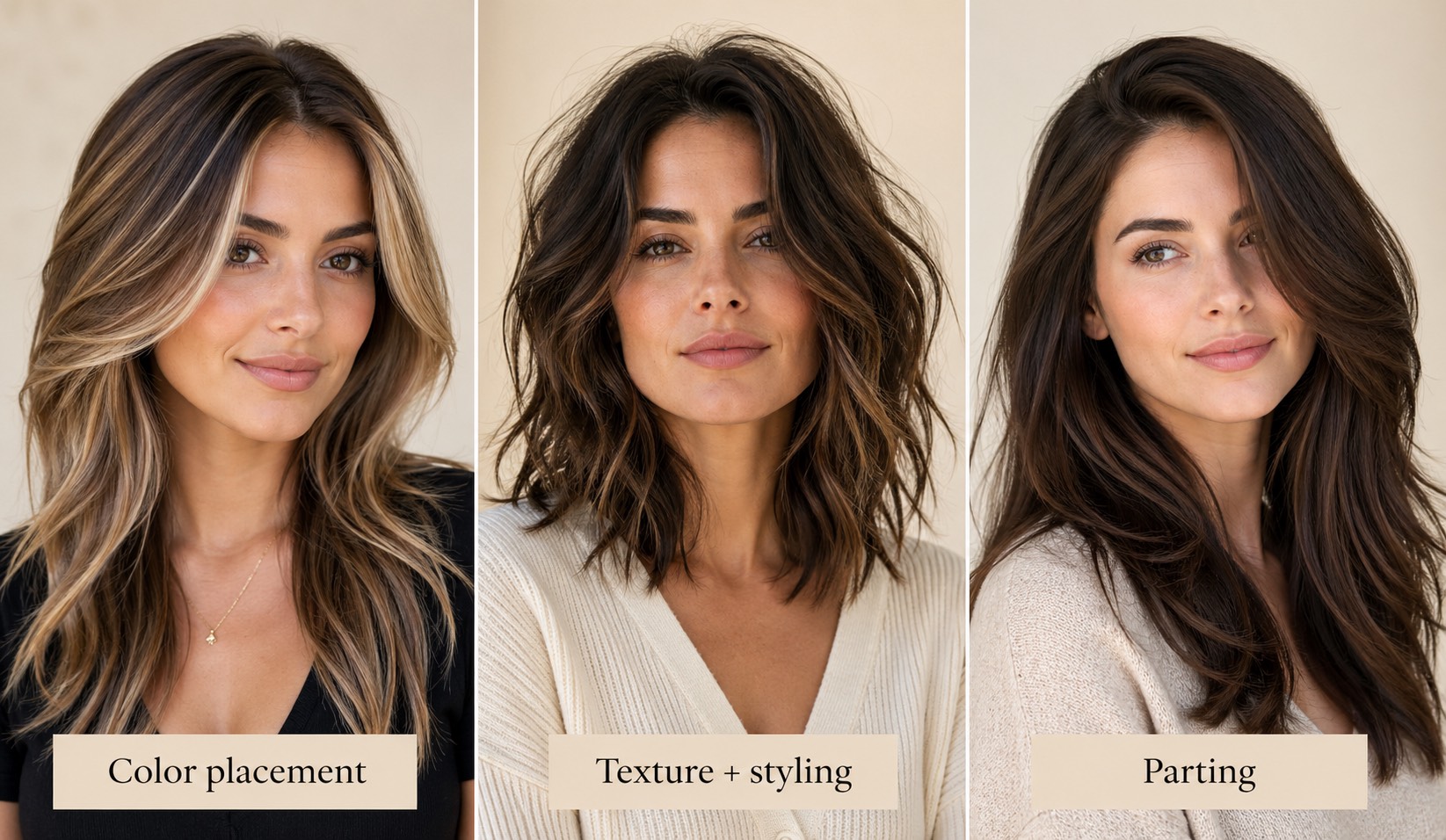
Diamond cuts gleam when hue, feel, and separation operate in harmony. The right haircut should blunt any sharp lines, enhance the overall silhouette, and maintain lift near the roots for equilibrium.
Color placement
Position soft highlights near the cheek bones to mimic the shape’s star motif without being harsh. Maintain lighter shades around the crown and just above the ears to broaden a thin upper face. Avoid heavy, dark panels along the jaw. They can pull the eye down and make the chin look pointy.
Experiment with delicate lowlights beneath the surface to give dimension without weight. A delicate, face-framing emphasis can mix up side-swept or curtain bangs, which smooth a slender forehead. For short cuts, lighten the top by one to two levels. For long layers, weave brightness from mid-shaft to ends.
| Area | What to add | Why it helps |
|---|---|---|
| Cheekbones | Soft highlights | Accents without hard edges |
| Crown | Light veil | Adds lift, balances length |
| Sides (above ears) | Brighter slices | Widens narrow zones |
| Jawline | Avoid dark blocks | Prevents a sharp chin effect |
Texture and styling
Loose, fluffy waves impart width through the jaw and lower half, softening angles. Natural curls and bends are best layered and shaped, which moves the volume around but still keeps the attention on the cheekbones.
Use a salt spray or light cream for a breezy, tousled vibe. Diffuse on low to maintain root lift because volume complements diamond faces.
Stay away from ultra-sleek, pin-straight styles. They elongate the face and emphasize angular lines. Chin-length bobs and mid-length shags with a side part add movement, soften edges, and read modern.
Parting your hair
A deep side part adds width to a narrow forehead and provides a side-bang look without the cut. A zigzag or off-center part disrupts strict symmetry, which comes in handy when hair is fine or straight.
- Deep side part: offsets narrow forehead, elevates the look
- Off-center part: soft balance, easy daily wear
- Zigzag part: playful texture, hides flat zones
- Middle part with flat hair: avoid. It stretches out the face.
Keep your shape with trims every 8 to 10 weeks. Freshen up your tone every 6 to 8 weeks, and style with heat on low to medium. Add root lift mousse, a teeny, pea-size amount, then finger-tousle as you dry.
Conclusion
To really nail it, a diamond face glows with sharp angles and symmetry. Hair that creates width at the forehead and jaw is most flattering. Soft layers work wonders. So do light waves. Let a few face frame pieces help soften those jagged edges. Bangs can alter focus. Side swept bangs open up the face. Curtain bangs can soften the cheekbones.
Short cuts can appear daring. A pixie with lift on top really looks dapper. A collarbone-hitting long bob reads chic. Long hair stays fresh with layers from the cheek to collarbone.
Real talk: Hair grows. Go for baby steps. Take a quick picture. Eyeball shape, flow and fluidity. Ready to discover your match? Find out your personal perfect hairstyle at WhatIsMyFaceShape
Frequently Asked Questions
How do I know if I have a diamond face shape?
To determine if you have a diamond face shape, look for a narrow forehead and jawline paired with wide cheekbones and a pointed chin. Measure the distance across your forehead area, cheekbones, and jaw. If your cheekbones are the widest and your face is longer than it is wide, you likely have a diamond shape.
What is the key haircut goal for diamond faces?
To achieve a good face shape, offset width at the temples and soften angles. Adding volume at the crown or jaw can enhance the overall silhouette, while avoiding bulk at the cheekbones is crucial.
Which haircuts flatter diamond face shapes most?
Long layers and shoulder-length shags are among the popular hairstyles that introduce movement and complement the overall silhouette, balancing cheekbone width while softening sharp lines for various face shapes.
Do bangs work for diamond faces?
Yes. Wispy curtain bangs and soft side-swept bangs are popular hairstyles that flatter diamond face shapes by visually narrowing the forehead area and balancing standout cheekbones.
Are short styles okay for diamond faces?
Yes, textured hairstyles are key. Experiment with a pixie featuring a layered top, a soft crop, or a tousled bixie. Keeping the sides soft will enhance the overall silhouette and not emphasize the width of your cheekbones.
Which styles should I approach with care?
Blunt bobs at cheekbone level, poker-straight center parts, and heavy blunt bangs can broaden the mid-face and chisel angles, making them popular hairstyles for individuals with diamond face shapes who want to enhance their unique features.
What styling tips help beyond the cut?
Opt for soft waves, side parts, and light face-framing layers to enhance your unique features. Focus on giving volume at the crown while keeping the ends light and airy. Balance accessories like earrings and glasses to avoid adding width at the standout cheekbones.